
We'd love if you'd leave us a 5 ⭐ rating & review and it's never been easier: www.ratethispodcast.com/suncast
The most expensive mistakes on a solar project usually aren't made during the install. They're made long before anyone arrives on site.
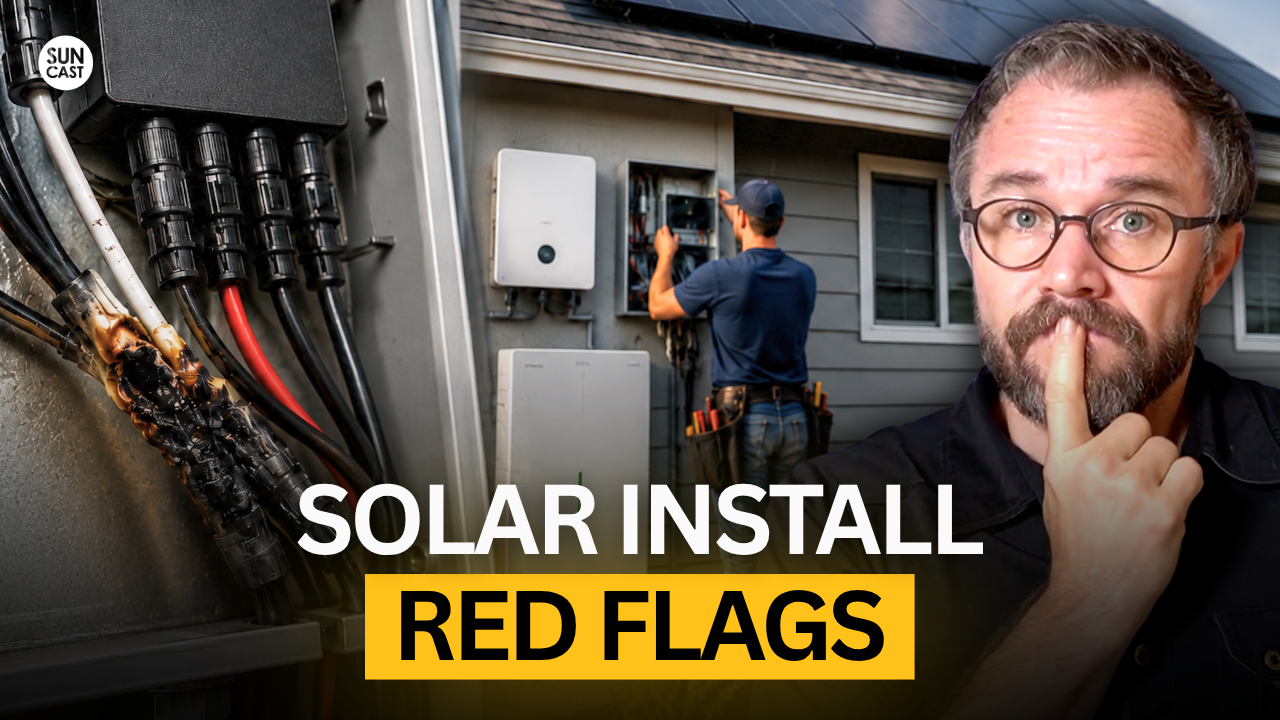
Greg Smith has spent nearly two decades helping installers avoid those mistakes. As one of the solar industry's most respected trainers and educators, and the author of a practical guide to energy storage, he's helped thousands of professionals understand what it takes to build reliable solar and storage systems that perform as intended long after the installation is complete.
In this live conversation from the NABCEP conference, Greg and Nico Johnson explore why communication has become the industry's number one service call, how better system design prevents costly callbacks, and why setting realistic homeowner expectations is just as important as selecting the right equipment. Along the way, Greg shares the simple disciplines that separate installers who are constantly troubleshooting from those who build systems that simply work.
Expect to learn:
🔹 Why communication failures have become the industry's number one service call
🔹 How better system design prevents problems before the installer ever arrives on site
🔹 Why managing homeowner expectations is just as important as sizing the battery correctly
🔹 What "No Boots, No Truth" means, and why every installer should adopt it
Whether you're designing systems, installing them, or supporting customers after the sale, this conversation is a reminder that reliability isn't something you troubleshoot into a system. It's something you design from the very beginning.
Hit play and learn why the best installers spend just as much time preventing problems as they do solving them.
RESOURCES:
Connect with Greg Smith:
Check out Tigo Energy:
"If you have a bad design, you're going to have a bad install, and then it's just going to have a bad experience later on." - Greg Smith
This Podcast is Free For You
Thanks to Our Sponsors
The following are Corporate Partners who have helped make SunCast possible:
Platinum Sponsor
The following are Corporate Partners who have helped make SunCast possible:

Noteworthy Quotes:
Greg Smith 00:00
So you have people that think either because they saw an ad or the sales person told them that, oh, well, I'll just get this, you know, five kilowatt solar system and a little 10 kilowatt hour battery, and it will power the entire home,
Nico Johnson 00:14
right?
Greg Smith 00:14
It's like, okay, well, that's true, it may only be for 10 minutes,
Nico Johnson 00:18
yeah,
Greg Smith 00:18
but it'll do it.
Nico Johnson 00:19
Solar used to be relatively simple, you got panels, inverters, plug them in, turn it on, and it just worked. Today, a solar install is actually a full energy system. In the modern electrified home or utility scale solar park, we've got MLPE, batteries, communication networks, software, backup power expectations, this shift is changing how systems should get designed, installed, and even maintained. And most of the biggest problems today, they aren't hardware failures at all. Few people have spent more time teaching installers how these systems actually behave in the real world than Greg Smith, a longtime trainer, educator, and author focused on energy storage and system reliability. Greg, it's great to finally have you on the show. I
Greg Smith 01:06
am so stoked, man. I am so stoked to be here.
Nico Johnson 01:08
It has been a long time coming.
Greg Smith 01:10
I appreciate
Nico Johnson 01:11
it. Yeah, man. Well, solar, like I said, used to be relatively simple, but today we have the complexity of so many different components. From your perspective as a trainer, what fundamentally changed when solar arrays became energy systems?
Greg Smith 01:25
That's a great question. So, I essentially grew up on nuclear power submarines, and I quickly learned that it's not just a bunch of independent things, everything works as a system.
Nico Johnson 01:39
Yeah,
Greg Smith 01:40
and so when I got into this industry I recognized that people did not look at these like you said earlier, and it's not just modules and inverter anymore, it's very complex systems, but people don't look at it as a complete architecture, they look at it as different pieces, and so what I see in the industry is a lack of understanding of how these things work, so that even something very minor during the design or installation phase will disrupt the entire life cycle of these systems.
Nico Johnson 02:11
Yeah, I feel like installers, and this is one of the reasons people come to the NABCEP conference, where we're sitting today, they increasingly think at a broader systems level, what are some of the complexities that MLPE and batteries, and even code updates have introduced that you have to now think about as an educator.
Greg Smith 02:31
All bad. Okay, so, and I'll just narrow it to one,
Nico Johnson 02:34
sure.
Greg Smith 02:35
So, if you talk to anybody around here, and NASA is cream of the crop, like these are all season people, or people who are, you know, have a passion for this industry, but if you talk to any vendor, the number one call to any service line is communication.
Nico Johnson 02:49
Yeah,
Greg Smith 02:49
and it only got more complex, you know, as we go along, because it ended up not being just a, an ethernet wire connecting an inverter to a router. We went from wireless communication, we went from can bus, you know, on battery systems. It just, it introduces more complexity, but, and I tell people when I'm training, all of these systems end up being just a, an exercise in attention to detail.
Nico Johnson 03:16
Yeah,
Greg Smith 03:17
and so one little misstep on a communication system, you'll spend hours,
Nico Johnson 03:22
yeah,
Greg Smith 03:22
troubleshooting.
Nico Johnson 03:23
It's a great point. A lot of folks in sort of the infancy of this industry, failure modes were very much hardware related. Is there something wrong with the inverter? Is there something wrong with the module? It seems increasingly it's the interfaces between components where we see breakdown. Why are architecture and design decisions becoming such a big factor in system reliability?
Greg Smith 03:44
Again, it's in the, in the design phase, particularly. I tell people, if you're, if you have a bad design, you're going to have a bad install, and then it's just going to have a bad experience later on. And so people are, they haven't really caught up to the way the architecture systems work. I mean, so we're very good at slapping glass, and you know, throwing a battery system in, but you don't understand the entire architecture around everything, and you put MLPE in the mix, and you've just got another set of considerations, and they're just not really looking at it in that, in that way.
Nico Johnson 04:18
I know you spend a lot of time training installers on troubleshooting on what to look for in the field when systems do fail. What are the most common design or commissioning mistakes that you're seeing pop up?
Greg Smith 04:29
Another great question, and it, you know, I've been with SMA and Sun, I'm with Tygo now almost 18 years in this industry. Yeah, and in that time the failures have generally been the same, yeah. So it comes down to now bad design, not understanding the technology, and particularly see that at Tigo a lot, where they have muscle memory with another MLPE, and so they think that's going to work with us, and so a lot of this. Boils down to, and I've kind of coined this phrase over the year, over the years, RTFM, read the fund manual. Yeah, and we even did a lot of research, and you know, trend analysis on our service lines. 30% of our service calls are RTFM, they just are not reading the documentation.
Nico Johnson 05:22
Yeah, what do you think are some of the more obvious field issues that are avoidable?
Greg Smith 05:27
The big ones that we see are connectors, yeah,
Greg Smith 05:30
and I mean that's common across the industry. It has been forever, intermatability, and you know, making bad crimps using, you know, the male or female part that are not the same make and model, right? And, and it's just that that's the number one thing that we see.
Nico Johnson 05:47
Yeah, yeah, this whole proliferation of jumpers in the industry, right? I know that's a big issue, that's one that David and the Solar Grade team point out a lot, but there's also increasingly complexity, which you've written extensively about with the battery guide, that adding batteries to the system changes not only the sale to the homeowner but the design overall. Home batteries are, I think, an essential piece to our renewable energy future, but most of us who've been here a long time are familiar with backup power. It's just that the way that we sort of think about selling these batteries and even connecting engineering them has changed. There's a gap with what homeowners expect during an outage, right? And what these systems are designed for. Can you talk to that
Greg Smith 06:34
extensively? I included a whole chapter in my book on customer expectation
Nico Johnson 06:41
management,
Greg Smith 06:42
all right, and so you have people that think either because they saw an ad or the sales person told them that, oh, well, I'll just get this, you know, five kilowatt solar system and a little 10 kilowatt hour battery, and it will power the entire home,
Nico Johnson 06:57
right?
Greg Smith 06:57
It's like, okay, well, that's true, it may only be for 10 minutes,
Nico Johnson 07:00
yeah,
Greg Smith 07:01
but it'll do it,
Nico Johnson 07:02
yeah.
Greg Smith 07:02
So the biggest thing that we see are number one, the homeowners treat these systems like appliances, right, and so they expect that kind of operational, you know, standard, right, when it's just, it's just not how it is, and they also need a lot of education from the installers on reasonable expectations of what these systems can do,
Nico Johnson 07:25
yeah,
Greg Smith 07:26
like you're not sorry, you're like you're not gonna power a five ton air conditioner for very long, right? And so you look at people like in Phoenix, well, that's a non-negotiable,
Nico Johnson 07:37
yeah,
Greg Smith 07:38
right, like they're not going to tolerate that, so it takes a lot of weeding out to find systems that can accommodate that.
Nico Johnson 07:43
Are we seeing folks as we, as they begin to install batteries, recommend more energy efficient, like single circuit air conditioning modules, sort of like I'm thinking about, like the LG ductless units, or it seems like that would make sense, right? If you're going to go to the effort of putting battery in, come up with something that can cool one room in your house. It's like, is that becoming more prevalent?
Greg Smith 08:06
Absolutely. And that's.. and I do talk about that, you know. It's like, you know, these ductless air conditioners. It's like, okay, well, it's pulling five amps, not 60, right, from a sun, right? Right. And so you have to like limit the amount of power that you're going to draw consumption, and you really try to limit it to creature comforts, which is why I'm a big fan of sub panels, because then that battery and solar has a fixed amount, generally speaking, of energy that it can provide, but if, when you do a whole home, which is what most homeowners want,
Nico Johnson 08:37
yeah,
Greg Smith 08:38
that panel is just, it's sucking every watt hour that it can from that battery and solar system,
Nico Johnson 08:44
right, and there's a lot. There's engineering involved in coming up with that critical load panel and rerouting those critical loads to the place where batteries can support them, right.
Greg Smith 08:53
I know, and it's not my money, right. It's easy for me to say, I just, you know, pull a sub panel, pull the circuits, you know, that's a pain. Yeah, I get it, but considering, and this is even particularly true for off-grid, you are married to those systems,
Nico Johnson 09:08
sure,
Greg Smith 09:08
for 20 years,
Nico Johnson 09:09
yeah, it's a pain, but like, what, what is the actual total person hours to create a critical load panel and rewire everything?
Greg Smith 09:18
Yeah, an extra three to five hours, depending on how good the person is.
Nico Johnson 09:23
Yeah, so you might be on the outside talking about an extra $2,000 if your electrician is $500 an hour, right? And what is that in a 20-530, $1,000 system, right? Plus the expectations that you are should be appropriately setting up front that this is how you can get the creature comforts with this battery, and here's what will happen if we power your whole house without the sub panel.
Speaker 1 09:46
Yep,
Nico Johnson 09:46
here's how long it'll last. My sense is, you know, who's gonna fix this is the guys from Noble Carbon, because they're gonna have those smart breakers, right? Yeah, and when smart breakers come along, we won't need critical load panels, will we?
Greg Smith 09:59
So. So it depends on like how you define that, right, but I get what you're saying, is it'll essentially be something that instead of, you know, doing a swap out for an entire panel, you can just put these breakers in there and they act as those load control
Nico Johnson 10:14
places, we can say there's some way to program it and say like if this then that, if these conditions are met, the air condition can turn on if these conditions are not met. The AC doesn't turn on, the mini split does.
Greg Smith 10:24
Yes, right, right, that's right. And when I was with Sun, they were working with, you know, home automation systems like Savant and Crestron,
Nico Johnson 10:32
sure, that
Greg Smith 10:32
did that
Nico Johnson 10:33
fantastic.
Greg Smith 10:34
But now that's a very niche area.
Nico Johnson 10:37
Yeah, it is. I've mentioned a few times that you are an educator, if not by training, at least by heart. You spend a lot of time teaching folks these complicated concepts and sort of creating a way for folks. I've experienced that you're a good storyteller. I know you love fishing, so let me ask this in a way that perhaps aligns with your passion, when designing a modern solar and storage system, what's the equivalent of reading the water before you cast? What should installers be looking for before they even start designing the system?
Greg Smith 11:10
Yeah, and you know, I've gotten really good at forcing fishing metaphors. It's a, it's a very similar story, though.
Nico Johnson 11:21
We'll put this number for you. You put on LinkedIn. Yeah, you
Greg Smith 11:23
know, I just don't.. well, normally I just don't go down the dock and like start throwing my lines in. You know, there's some some prep. Yeah, and you got to look like, where are they jumping? Are they just breaking the water? You know, how high is the water? No, it's going to determine my bait. Well, there are so many pre-steps that should come before that battery is even laid down, right? And in the design stage, right, like you are.. I'm well known for RTFM, and I'm really starting to pound on this other one that I came up with. No boots, no truth.
Nico Johnson 11:55
Yeah, if you don't
Greg Smith 11:56
have boots on the ground at that site, how can you possibly design a system,
Nico Johnson 12:01
right?
Greg Smith 12:02
Right, how can you possibly do O and M on a system if you're not there gathering truth? So that's that's where I see a lot of issues come from, and it's not sexy, like I get it, like nobody wants to do a load calculation heat, yeah, that absolutely has to come first.
Nico Johnson 12:20
But what are some of the early hidden risks that you can identify by having boots on the ground?
Greg Smith 12:25
Oh man, equipment placement, yeah, that's a big one, right? So, and I've been preaching this since my SMA days, like don't install equipment on the south side of a house,
Nico Johnson 12:35
yeah,
Greg Smith 12:36
because it's just going to get beat down, you know, on by the sun every day, don't install an inverter on the backside of a bedroom wall,
Nico Johnson 12:44
because it's going to be humming.
Greg Smith 12:45
They hum early in the morning, and we get the call on claim day, because Saturday morning, when they, you know, after they turned it on, they're trying to sleep in, and it's just buzzing.
Nico Johnson 12:55
Yeah. Amazing. What's your perspective on the AHJ requirements constraints around how batteries work inside of garages, bollards, and all the other protection mechanisms.
Greg Smith 13:09
Yeah, you know, 855 that throws in a lot of different, you know, requirements like that, you know, for bollards, and the code is always tricky. UL things are always tricky. I mean, there's.. I was talking to a guy last night, you know, at the event. They're still at 2008 Code Soggy. Wait, they don't even.. they don't even know what Rapid Shutdown is.
Nico Johnson 13:29
Where is that? Pennsylvania, what? Weston?
Greg Smith 13:33
Yeah, probably like way out in the thick belt, right? But, but to the point, you know, we have all these ASJs, and they can enforce whatever parts of the code they want, or, and you know, demand more. So, I always tell people, you know, you don't want to get into a pissing contest with your inspector, because that's not going to be good for anybody. You know, you want to talk to them. I'm gonna tell these installers that come to my training. It's your job to educate them.
Nico Johnson 13:58
Yeah, it's your job. Yeah, and that just makes for a better relationship down the line, so that you don't get all these buzzes and dangs, you know, after you spent all this time and money on the inspections, you can work with them before that happens. Yeah, I'm sure you get a lot of chance, especially in an environment like NAPSEP conference, to interact with folks who are relatively new to the industry or young in their installer journey, what's the one discipline that they need to master to build reliable solar and storage systems that are gonna last decades,
Greg Smith 14:32
and that's a while, that's a multifaceted question, but
Nico Johnson 14:36
sure, or maybe it's a core skill set,
Greg Smith 14:40
of course, you know, learning the basics, like wire stripping, and,
Nico Johnson 14:45
yeah,
Greg Smith 14:45
you know, pulling wire. Of course, you need to do that. But I mean, honestly, Nico, like I said earlier, 30% of the calls that we get are RTFM issues, and I saw this at Inter Solar during the Solar Games.
Nico Johnson 14:57
Oh yeah,
Greg Smith 14:57
Tiger provided our optimizers SC. Seasoned installers, okay?
Nico Johnson 15:01
Yeah,
Greg Smith 15:02
only one crew read our quick start guide and install those TS fours the way that they're supposed to, yeah, only one out of six,
Nico Johnson 15:11
right
Greg Smith 15:11
out of six. Yeah, so at the season guys aren't doing that, yeah. And what about all these other people that haven't been in the industry very long? I
Nico Johnson 15:18
love it. I would not.. I don't know why it wasn't self-evident to me that your advice for the one discipline to develop is the boring one. Oh, Greg Smith, it's awesome to have you on the show. It's fun to watch. I hope folks will subscribe and follow you on LinkedIn. I know that you've got some videos going up on YouTube, hopefully you've got more books coming along. Where's the best place for folks to find you and connect with you? Is it LinkedIn? LinkedIn, and then I also have Snarky Solar Guy com. I love it. I didn't know that. Fantastic, Greg Smith, solar legend, energy storage author, and educator. Thank you for taking time to come to this NCCAS stage for
Greg Smith 15:57
us. Anytime,
Nico Johnson 15:58
always good to see you. Hey, thank you for tuning in. And if you are going to one of our other upcoming events, please swing by our live stage and say hello. I do love meeting you in person. Twice weekly, we deliver conversations with founders and leaders on the front lines of the clean energy transition, and we're here bringing this content to you each and every week, free of charge. Of course, it's not free. Our sponsors help pay the bills and keep the lights on, so that we can help you build your legacy in the clean energy transition. And so, if you'd like to say thank you to them, or learn more about what it is that they bring into the world, or perhaps see how you could reach 1000s of listeners twice a week, just like they do, check it out at SunCast dot media forward slash sponsor. Remember, you are what you listen to. Thanks again for showing up, Solar Warrior. It's half the battle.

Nico Johnson
Entrepreneur & Podcaster
In my 20 year career, I've worked with dozens of entrepreneurs, intrapreneurs and professionals in transition to clarify their mission, set or stretch their goals, and work through the barriers to their growth.

Latest episodes


We’re Excited to Hear from You!
Don’t hesitate to reach out—whether you’re here to learn, share ideas, or work with us, we’re ready to connect.