
We'd love if you'd leave us a 5 ⭐ rating & review and it's never been easier: www.ratethispodcast.com/suncast
Clean energy has made tremendous progress on technology.
Solar is cheaper. Batteries are scaling. Virtual power plants are becoming real grid assets. Electrification is accelerating.
But many people still do not understand why these technologies matter to them personally — or whether they are actually worth the cost.
So what’s missing?
In this conversation, Nico sits down with Jessica Fishman to explore why the next phase of the energy transition may depend less on technical innovation and more on public understanding, trust, and emotional connection.
Jessica shares lessons from nearly two decades working across solar, storage, policy, and communications, including what the industry can learn from the Inflation Reduction Act, why facts alone rarely change minds, and how clean energy companies can better connect their work to the things people already care about: affordability, resilience, independence, and economic opportunity.
Expect to learn:
🔹 Why facts alone rarely change minds
🔹 How clean energy can evolve from a “push” industry into a “pull” industry
🔹 What the IRA taught us about public awareness and policy durability
🔹 Why emotional connection often matters more than technical precision
🔹 How stronger public understanding could accelerate energy adoption
If you’ve ever wondered why technically superior solutions still struggle to earn broad public trust, this conversation is worth your time.
RESOURCES:
Connect with Jessica Fishman:
"We spark the imagination of people in terms of how energy can actually work for us versus against us." – Jessica Fishman
Leah Stokes
This Podcast is Free For You
Thanks to Our Sponsors
The following are Corporate Partners who have helped make SunCast possible:
Platinum Sponsor
The following are Corporate Partners who have helped make SunCast possible:

Noteworthy Quotes:
Jessica Fishman 00:00
The clean energy industry is based on science and technology. A lot of us come from engineering backgrounds and technology backgrounds, where we think facts sell, but that's not true in almost any industry. What sells is emotional connection. What sells is what are the values and benefits that you're providing. So it's critical that we as an industry transition our communication into the more value-based and emotional selling.
Nico Johnson 00:27
Hey, welcome back, Solar Warrior. This is Suncast. You know, the clean energy industry sure spends a whole lot of time talking about technology. Today's guest argues one of the biggest bottlenecks in the energy transition might actually be the communication, how we talk about what we do. Jessica Fishman has spent nearly two decades helping clean energy companies and executives like you translate complex technology policy and market dynamics into language that customers, communities, and policy makers can actually understand. In this conversation, we unpack why the facts alone aren't going to win you a whole lot of battles. Why policy victories don't automatically become public support mechanisms, and whether the industry has been too passive in defending itself. We also want to look at whether lasting change comes from fighting the system from the outside or working within it to create lasting change. We dig into energy literacy, customer trust, project opposition, and what Jessica learned building her own high-performance solar-powered home right here on Suncast. Let's get ready to tune up your skills, Solo Warrior, as we tune into another powerful conversation with Jessica Fishman. Jessica, you've been one of the voices that I know a lot of us both admire and look to for clarity in this sector, I'm curious, when did it dawn on you that there may be more of a clean energy communication problem than technology problem from a core sort of infrastructure to be addressed?
Jessica Fishman 01:58
I think one of the things that has happened over the past decade, decade and a half, is there has been politicization of clean energy. So, if you look at polls from 20 years ago, there wasn't - it wasn't a partisan issue. Both Republicans, independents, and Democrats all felt pretty much the same when it came to clean energy, and they were all basically pro, but there has been a lot of, a lot of money, and a lot of effort put in to specifically politicize clean energy, and to make it look as if it's not a bipartisan issue, and it's worked for some people, but over that time, as we're seeing the greater divide, that's when it became clear that we needed to talk about clean energy differently. So, it's really been an evolving perspective. I'd add one more thing. I think that there is a lack of imagination when it comes to energy. We've been stuck with the same system for a century, and as long as people's lights go on and off, and you know when they want them to, or they're able to heat or cool their house, there hasn't been much interest in understanding how things could look differently.
Nico Johnson 03:16
You've had the privilege of working inside of some of the biggest industry players like Solar Edge, you've had clients independently and through corporate opportunities where you've managed messaging, but you've also been a really good observer of sort of where facts fail. I'm curious, if you can think of examples where the facts were right, but the message nevertheless failed to reach its intended audience or move that audience in the direction we wanted.
Jessica Fishman 03:44
I can probably take an example from the larger solar community, especially around the O triple B. So I think we did a really good job of transitioning some of our messaging, expanding it out past the impacts of climate and transitioning to energy independence and American energy dominance and American energy period, American jobs. I think we did that a little bit too late, though. I think that's something that we should have been doing 10 years ago. That should have been the messaging that we were focusing on, and the pivot was almost too quick, and we were sort of following the stream versus getting ahead of
Nico Johnson 04:26
it, you know. When I think back over that 10 years, there was a lot of uncertainty from the industry side as to whether or not we'd ever see any sort of domestic clean energy particular manufacturing push or impetus, I think you could argue if we really just think about the last 10 years. However, given that the original solar world petition case was 2014 the writing was on the wall for solar and others were definitely pushing to say we need to defend and protect our, our American manufacturing and. Suneva, SolarWorld, and many others sort of jumped in to claim that I'm curious if there are specific technological angles that we could or should have focused on. Obviously, what most people think of as a domestic industry centered around solar panel manufacturing, but there are many, many other components. Is there some other like, if we think of this as a prism, is there some other angle through which we should have been looking for the last decade that would have maybe liberated us from this thought of, like, oh, we need module fabrication, or we need battery factories, but rather something else that serves to pull technology back stateside and create a domestic industry rather than what ended up happening, which is us being heavily reliant on import.
Jessica Fishman 05:48
As you said, it's really important to have this domestic to have a domestic supply chain. We are seeing that more and more today due to geopolitics. Having that domestic supply chain is really, really critical, but there are some other areas where, if we look at the way that our energy is, our energy infrastructure currently works, it, it doesn't do enough to sort of create that pull. So that's one of the things that I really love about virtual power plants, is it completely changes that dynamic, instead of solar, wind, batteries, other distributed energy resources acting as a competitor to the grid, it actually becomes part of the grid, so it pulls in the utilities in a different way that they aren't, they aren't set up to necessarily want that competition, but when you, when you have virtual power plants by giving them access to batteries and allowing them to leverage demand response in a really smart way, that the demand becomes much larger, and it would help motivate continued energy dominance and continued supply chain build out in the United States.
Nico Johnson 07:08
I agree, and I think about companies through the late teens, early 20s, like Sun N, coming out of Germany, for example, installers who said, even Sunova, who thought, you know what we can aggregate these resources. It always felt like to the core underlying conversation here, there was a narrative gap. We were positioning batteries as an alternative to central generation, which felt like grid controlled rather than spending money as an industry to lobby to have a unified message around providing alternative grid resources to the utility to avoid costly infrastructure upgrades like transmission lines.
Jessica Fishman 07:55
One of the issues is what the current business models of utilities are currently, they're motivated to build out costly infrastructure in order to improve their profitability, but there are other business models that are out there that can, that can work, and maybe both be that will align with the ratepayers and the motivation for a utility to be profitable, and working from the inside to try to change some of the system structures, I think, is really important, and something that is critical for the clean energy industry to start thinking about.
Nico Johnson 08:33
Virtual power plants are certainly a net positive grid asset that we're now seeing momentum for. I would argue that there's a lot of incredible work in the previous administration through Department of Energy to help foster this. I wonder, when you look as through the professional lens of communication at our industry, what does the industry still explain poorly?
Jessica Fishman 08:55
What you just said is actually a perfect example of one of the things that we're doing wrong, and it's really ingrained in us. One of the things that I like talking about is semantic infiltration, and that when we use the words or the language or the terminology of our competitor to explain ourselves, so using the word alternative is an a perfect example when we talk about alternative energies, is in a perfect example of semantic and yes, I did that. I never heard this term, semantic infiltration. I love that. I'm gonna add that to my lexicon. So, instead of talking about as an alternative, I think we are quickly becoming one of the most reliable, most important, and critical energy sources on the grid. I think we're at 80 to 90% of new
Nico Johnson 09:47
new commission,
Jessica Fishman 09:48
exactly new capacity that's added to the grid. So we're no longer an alternative, we are becoming the standard, and one of the reasons for that that I often like to talk about is what's the difference between. Between resources versus technology, when we're talking about solar, wind, batteries, geothermal, these type of energies, what people used to think as alternatives, they are, or what some of us still think of as alternative energy, what they are is technology. Well, our old, outdated energy, our fossil fuels, like literally fossils, like it is very, very old. Those are resources. What's the difference between resources and technology? Resources deplete, technology advances. That's why we continue to see hockey, hockey stick types of curves for any of the new type of technology that's coming online, whether it's solar batteries or wind or geothermal, we see hockey stick type of adoption because technology advances.
Nico Johnson 10:48
You know, listen to talk about all this. It feels like one of the industry's biggest mistakes has been treating communications generally like something that we layer on afterward instead of something that needs to be embedded from the beginning. I think a lot of people still hear the word communications. They think social posts, press releases, speaking opportunities at trade events. That's not really what we're talking about fundamentally when we package the thought of the thought, the product of comms or communications. Most people in that realm sort of think about marketing as well as just like emails and social posts, so I'd love to hear from someone who has spent most of her professional life packaging comms and marketing and helping brands position themselves well. What does marketing really mean in clean energy? What does it encompass?
Jessica Fishman 11:38
Oftentimes when we think about marketing, we talk about marketing and communicating our specific technology, our specific company tech, or our specific technique product, so you know, maybe why my inverter is better than the other inverter, or why my trackers are better than the other tracker, instead of talking about why our electro tech, our energy technology is better than the incumbent. We need to have a more coherent conversation and communication outside of our industry bubble about why our technology is much better than the previous technology that is people are currently used to, is
Nico Johnson 12:21
there a way, other than relying on the trade associations, that marketers can kind of get on the same song sheet? I mean, a lot of what I hear you saying is, hey, we have sort of a two pronged battle front, one is we have to individually, as a company, sort of defend our territory and ensure that folks understand why we deserve to exist, but on the other hand, as an industry, we're defending territory and trying to suggest to the general public and to policy makers that our category deserves to exist. How have you seen I'm going to stick with large corporates collaboration across entities to try and consolidate messaging and come up with a message that everyone can sort of read from the same song sheet and have similar outbound alignment.
Jessica Fishman 13:14
I'd say that you make a really great point. I think that so there are some industry orgs and other organizations that are doing a really great job already pushing this, this messaging, and I would highly recommend for marketers in the industry to elevate what they're already doing and to keep pushing it outside our bubble into make sure policy makers are hearing it, but the general consumers, that the general public is hearing it. I have certainly seen a number of companies that are leaders out there that are doing that, that really are trying to get the message that our technology is better than fossil fuel resources, and explaining why things that I've seen in the industry is it's still very, very much of a push industry on a frontline level, so it's the installers that are going out there, or you know, the sales, the sales teams that are going out to CNI and other types of DG opportunities, versus having more of a pull opportunity, and I think one of the ways that to specifically to your question that we can do that is as you're further up in the value chain, OEMs really reaching out and creating these larger campaigns to help position solar wind batteries in a, in a new light, so that we turn into more of a pull industry versus a push industry, and that can certainly be hard to do, because it's harder to track your, your, your marketing budgets and your ROI from that, but what, when you're able to widen the top of the funnel that much more. More, then you're going to see more leads coming through. I often look at top of funnel type of marketing activity as the infiltrate infantry that they are going out and setting, setting up the ground for the for the sales teams, so that it's that these leads are already warmer. It's a really critical part of moving solar wind batteries and geothermal, the other types of energy technology into the wide, into the general public, into a much wider stream.
Nico Johnson 15:35
I'm curious, why companies wait until there's opposition or confusion in the market before they start explaining themselves, and how we should be trying to improve on the sort of the location in communications as a part of our overarching strategy.
Jessica Fishman 15:51
We're often focused on maybe fighting policy that's going to, you know, pull solar back a little bit, whether it's, you know, moving to NEM 3.0 or net billing or time of use, and trying to minimize the damage. Where what we really need a system change, and if we think bigger and chip away at the bigger system, I think that's where we need to be headed. So, oftentimes in the US, we, we are not always familiar with what other countries are doing, and how other countries, how they work. So, Australia is a great example, because they have a competitive energy market, which is why they, their systems cost a lot less to install, especially on the resi side, and when once we start understanding that this is not how it has to work, that there are other systems out there, then we can start leveraging that to work towards system change to completely disrupt monopoly status. I think that's one thing that we should be going after. I often equate it to like energy populism, because I think once people truly understand how our energy systems are set up to not work for them, and we're seeing that right now, especially with rising prices with data centers coming in, that people will get more involved, so it's about instead of always being on our back foot trying to go on the offensive and change the systems that are preventing change.
Nico Johnson 17:26
Well, I think one way we did that successfully, and I don't want the listeners to think that we believe that the industry is always on the back foot and defensive. I think that the IRA is a great example of us being very proactive and offensive for a half a decade or more, where we marshaled resources, sort of built the infrastructure, and struck while the iron was hot. As soon as Biden came into office, the industry really rallied behind a whole lot of concepts that we knew needed to be in place that ultimately became the guts of the Inflation Reduction Act, at least where it concerned energy and clean energy. One of the arguments that I've heard from you is, okay, yes, that's great. We got this amazing legislation passed. Who cares? My care, my parents, your parents, nobody really understood the real world impact, or who made it happen for them. So, where do you think we would need to put our input emphasis and focus next time around. What did we get wrong that we need to really think about structurally as an industry? One
Jessica Fishman 18:27
of the things that happened with the IRA, it was specifically designed for entrenchment, so there were a few things that that mean that happened with that one was it was designed to help battleground states and red states, a lot more than it helped blue states, which was, we were, I think, a lot of people were betting on the fact that, yes, that it wouldn't be overturned in any new administrations or new congresses, because it would hurt their own constituents,
Nico Johnson 18:59
right?
Jessica Fishman 19:00
One of the issues Julian Spector did an amazing article series leading up to the to the recent elections of how the IRA impacted the different battleground states, such as Georgia and Pennsylvania, and what I remember reading was that people working at some of the plants that happen that were built because of the IRA had no idea what the IRA was, they had no idea that they owed their jobs. Wow, to this, to the administration, and to this law. And I think that speaks to a really big gap of communications. The my understanding is that the administration, the Biden administration, felt that their philosophy was let's just get good work done and it'll speak for itself, and that's never the case. It's not the case for individuals in corporate life, and it's certainly not the case for policy. So we need to make sure that when there is the IRA 2.0 Know that there is a large chunk of money that our budget that is put into communicating, and we see how that that communication is so important on other legislation. The ACA was an excellent example of that, because there was a lot of communication put into that. It impacted millions of people.
Nico Johnson 20:20
Remind me, ACI is
Jessica Fishman 20:22
the Affordable Care Act. Oftentimes, people can call it Obamacare, and the entrenchment of that, no matter how many times it's been tried to, you know, take overturned, that's right, or it has, for the most part, stayed a lot of the land. Yeah, and it is so critical to communicate that, like, that's why people are so upset right now that their health care insurance is going up, because they know impacts, so the same needs to happen. We need people to know that the reason their electricity prices are going up right now is because of the O Triple B.
Nico Johnson 20:56
So, how do we do that? Because that's the hard part, right? Like, it's one thing for me to hear it as a let's, let's just say I'm director or vice president of comms or marketing at EDPR or Signal Energy or Moss or Solve or Seg or want to name your manufacturer or your developer. Okay, great. How do I like, I can think specifically of how Alex Zoo at ES Foundry or Jim Wood at Seg can take action on what you just said, but what if you don't necessarily have direct influence or access to the or a budget for that kind of communication? Is this something that we have to do through our trade organizations? What are the what are the methods that folks can activate, they can put in their budget, they can put into their marketing plan.
Jessica Fishman 21:42
Let's talk about grassroots. There's a lot of grassroots opportunities. I think each and everybody, every one of us in the industry needs to be more active about communicating, whether that's on our social platforms or around neighbors. We all need to become the spokesperson for our industry, and that's also true when it comes to policy. We all need to be active, showing up, calling our representatives, each and every one of us needs to do that. So that's just at the grassroots that we can all do. So, as a marketer, providing your colleagues, your employees, your fellow industry friends with that messaging, making sure that everybody has access to it, and providing them tools. There are already some great companies that are, that are doing this today. If we're talking about something with a little bit more money behind it, or a little bit more budget, you know, being involved in podcasts, or speaking outside of the industry, whether it's with earned media or with paid commercials, there's some real, there, there's some really great stories out there, and pulling in the people who have benefited from our technology to be our spokespeople to support them in communicating how the our technology has helped them is another great way, so I think, what if we're not outside of working with the industry orgs, we can still work together as an industry, as you know, throughout the Valley Chain to do something to do bigger communication campaigns to make sure it's echoing across the general public. I'd love to see a an ad out there about the energy prices, and you know how somebody who has switched to solar and has, you know, switched to an EV is way less affected by the current prices right now. There is an opportunity with the energy prices rising, both in terms of our home electricity, but also our gas prices, to really go after the incumbent, and I'm not. I'd love to see that happening at a much wider scale.
Nico Johnson 23:53
I appreciate those specific examples, and listening to you talk about it helped. I can't help but feel that there's this bigger tension underneath can all of the dialog around marketing and comms, you know, there seem to be two clear instincts within the clean energy ecosystem: fight the system from the outside, we often have this vernacular, us versus them, the utility is somehow the enemy rather than a partner, or work within existing institutions and gradually change them. Where have you landed on the possibilities for helping the industry evolve the way we think about and have thought for two plus decades about the tension in our role in the energy infrastructure?
Jessica Fishman 24:37
I completely agree with that. What you were saying, that we are often seen as fighting the system, but we're quickly becoming the system. So I would like to advocate for more people to specifically join, join the system, so doing things like running for office or running for. For the public utility commissioner, being more involved in the system is really, really critical, and our incumbents have seen that, have seen that, and done that, like that's why we talk about, you know, our captured regulatory bodies, and as we become, as we grow up as an industry, as we continue to mature, it is going to be critical for us to be a part of the system, and if we're going to circle back to virtual power plants, that was one of the one of the main goals with virtual power plants was to become part of the system, was to align the incentives of utilities with the incentives of our industry,
Nico Johnson 25:40
a couple other things that sort of piggybacking on that I have noticed, I'm encouraged. There's a gentleman named Jason Knapp, I hope to have him on the show soon, who used to work at CEA, and I think he was at one of the other battery manufacturers, if I'm not mistaken, and he's running for Congress. One of the reasons is he was a fighter pilot and said to me, this isn't the government that I defended with my life. I want to be personally involved in making the change that I want to see in the world. I think that we get busy as entrepreneurs and operators trying to make our company into something that's financially viable, that has a market that people recognize, and we lose sight, even in our day-to-day, of the opportunity to participate in civic action in our own communities, and on, you know, POC, POC, PUC boards, or town councils. I would love to see more, and I believe that it is happening, but that, as an industry, we don't take, take these examples to the street, so to speak, even if that street is LinkedIn or Instagram, or what other social media we could leverage. I don't see enough clean energy advocates that are public about how involved they are in their community, so that their neighbors see that folks in clean energy are energy, and they are making a difference in fighting for their community's welfare and well-being. I think that would make a difference, you know. I had John Soca on recently. There are organizations that have made it their mission to really bridge the divide between the two-party system that we have, where folks to help re-establish this idea that it's not just Democrats who believe in these things that are that improve our economic and environmental well-being, and leave a planet that our children not only are can survive on, but feel motivated to try and repair and protect. So, beyond just like personal action, I want to see more companies investing into supporting these nonprofits, and I know Next Power and a few others, along with ACP and SEA, are helping to foster organizations like Clean Energy for America that help to speak on behalf of the industry. I wonder if you're seeing other examples like that, that help us not fight the system, but support the evolution of a new way of interaction with our neighbors.
Jessica Fishman 28:08
There's Vote Solar, but then there's also organizations that are trying to foster foster leaders who will join Puck and get them ready to join a different, to join Pucks. There's other ones that are supporting leaders to become to become politicians and to join to run for office that are specifically focused on clean energy. There's others that are focused on specifically focused on state state level policies. Those are also critical. So, like seeing these new organizations continue to grow gives me a lot of hope that the industry has has is growing up and is is reaching maturity. Wait, wait, it's a where we are as an industry is so different than where we were just 10 years ago, and seeing that evolution has been really astonishing, and like I said, provides so much hope that we're headed in the right direction.
Nico Johnson 29:07
I'm encouraged by, and I apologize that yes, a lot of the examples I give are predominantly male-driven examples. It's not because there are no females, it's just at the moment I'm not pulling one for these for the example that I have in mind of a female leader, I'm really encouraged by the amount of diversity we're seeing in the industry, broadly at a leadership level in the industry, and I'd like to see more of it. I think both of the companies I'm going to mention really exemplify elevating female leadership and also diverse leadership, but I have seen, and I want to challenge these two individuals, and more. I've seen such a deep commitment by folks like Chad Farrell at Encore and Costa Nicole at Panel Claw in their fervent commitment to from their company dime travel to Washington and to their state house in their own. States and their constituent states to advocate on behalf of the industry. I'd love to see them start to apportion a part of that resource toward creating local television or radio campaigns that speak generally to their neighbors, not just to the legislators, but the community. Like, we just don't, as an industry, have that focus that says, well, if I help convert more homeowners and community leaders to be to understanding the truth of renewable energy as a big company, as a company that has a major European, in both of these cases, European backer with hundreds of millions of dollars in support, can we help move consumer sentiment by putting some of those dollars that we put towards advocacy towards public awareness in reading some of the stuff that you have published, and also watching, in particular, the episode that you did with Aaron Nicos on This Week in Solar. Shout out to Aaron. You know, you point out that most people experience the energy system generally as one thing, their monthly electricity bill, and that, that is still so confusing for normal people and industry folks like us. What do you think the industry misunderstands about the nature of that reality for homeowners and even businesses?
Jessica Fishman 31:14
The industry has done a really great job of developing relationships with community, like at the community level, whether it's individual family or business owners or farmers, and has found really good messaging and develop those really strong relationships, but we need to, we often have to repeat that every time we're going into a different community, so it's not really scalable. What we need to do differently is think about communications and a capex versus opex form, so right now we're working more with marketing and communications on opex form model, where every time we want to go into a new, into a new community, we have to repeat it, so that's ongoing costs versus if we looked at as a capex and had higher level communication campaigns about what Electro Tech does, so that could be talking about having a campaign around how solar has really helped farmers keep their livelihood, especially with fluctuating prices, or right now, while there might be some supply chain issues, creating that messaging at a very high level that's already out there for people to see, whether it's a commercial that we can get on CNN or maybe it's on The Daily Show podcast or even on Fox News, have that communication out there, and it becomes a lot more scalable for the industry to go into new communities.
Nico Johnson 32:46
I agree with you. I think a lot of folks would hear that and head nods. That makes so much sense. Why does that come out of my budget? Why doesn't that come out of CS budget or ACPs budget? So, ultimately, the question then is, okay, whose job is it, and if it's someone else's job, but they can't do it without a budget or a fund, then maybe my job is to contribute that fund, and so we have this sort of everybody standing there like looking at someone else wondering, is this person going to shoot first, and therefore you, the marketing budget, the executive presence and awareness and availability goes toward from a nervous system perspective that thing that is causing the fight or flight in our business, in our neighborhood, in our pipeline, rather than the proactive work that we all intellectually ascent to needing and wanting to seed, wanting to see happen, everybody I think in the industry would agree. Wouldn't it be so great if somebody paid for a marketing campaign that showed how exactly this farmer in Horry County, South Carolina, is benefiting because of a solar array, and that transformed their economic situation, and as a result, kept that plot of 1000 acres from turning into some yet another cookie-color housing development that is unsustainable for our society. This is the kind of conversation that I've been having over and over on SunCast with folks from agrivoltaics to manufacturing, like Alex Zoo is talking about the transformative nature of ES Foundry going into rural community outside Greenwood, South Carolina. No, like very few people outside of that zip code know that ES Foundry is chance has saved 350 jobs and is investing in another 700 right? Same is true all over Texas right now, and the question that we all have, you included, is not, are we smart enough to do this? Do we all agree to do it? It's who takes the lead on something like this.
Jessica Fishman 34:50
I guess the outcome from that is everybody listening to this is responsible. Start acting, start writing on you. Follow
Nico Johnson 34:58
that is ultimately the. The takeaway, right, the takeaway is we cannot have diffusion responsibility. We are all responsible. Nobody is going to save you. You have to do it yourself
Jessica Fishman 35:11
and try to create collaboration and partnerships. There's people throughout your value chain who will likely jump on board, you know. If you're an OEM, you're going to have distributors, you're going to have your EPCs, you're going to have developers see if you can create something bigger by partnering together,
Nico Johnson 35:26
so I know that you've worked on a lot of different campaigns with technology across the board, from micro devices, modular electronics to large infrastructure like trackers. Is there a generalization where you could put your finger on something that you think customers actually care about more than the industry believes that they do? If we say that they don't really care about the technology as much as you think they do, is there something they care about more than we think they do?
Jessica Fishman 35:54
The industry has done a really good job of talking about LCOE and talking about the financial benefits, and we often fall back on that at the same and I am a big advocate of talking about value and and the financial bottom line, but oftentimes decisions are still made emotionally, they're often they can oftentimes be be different emotional decisions depending on policy or or political views, I was, I lived in a, in a location, and I still do, in a location, and locations that have people on the far right and on the far left, and you will see, especially like at the residential level, people going solar who will have a sign that says, in this house we believe, and then you'll also have a Trump flag on another house that also has solar, and while those people both are benefiting from the positive bottom line that they're getting from the financial returns, their emotions were a big part of their decision. I'm guessing that there was one person who really disliked their utility and have had a bit more libertarian front, and did it because he wanted to be more independent, while there's another family that was really interested in climate. So, I think the main point is to understand your audiences and change your messaging to fit them, and I'll give an example of that. When I was, I was testifying recently about not plug-in solar legislation in Minnesota, a lot of people were talking about the cost of energy and pollution and climate and topics like that. The house in Minnesota is split 5050 All the Democrats, or it was clear that they were the Democratic politicians, that they were going to vote for it. It was the Republicans that were not totally sold on it, even though we've seen a lot of legislation be passed in in some run states and purple states for plug-in solar, and I knew that I wanted to convince the Republicans on that committee, so I said I think this is a property rights issue. If the government can't tell me whether I can plug in a hair dryer or if I can put a generator in on my house, you know, besides some safety regulations, they should not be involved on at all what I'm doing on my property, and that is a message that resonates with the more libertarian and more right-wing side of the political spectrum. So, it's really about tailoring our messaging to our audience. We don't have to fully get away from any, you know, only focus on financial. We need to remember that decisions are often emotionally made and understanding which is the right emotion to target for the individual consumer. So, if we're talking about farmers, what is the message, the emotional message? It could be about keeping their farmland in their family for generations to come. One
Nico Johnson 39:08
of the things, Jessica, that I have complimented you on is of the many things that I think in our ways that you show up on behalf of our industry is you have a very cogent and often insightful and funny approach to your personal brand, your personal communication through LinkedIn. I, you know, we, I believe that LinkedIn is probably the most important social media channel for us as an industry to talk to one another to our industry. I believe there are other channels when we talk at a macro level about communicating to those farmers, and it's probably not social media, unless it's maybe Facebook, but let's stick to LinkedIn. I wanted to get a sense of how you, as a professional communicator, think about what, for many, is a nerve-wracking process. It is a. Interest, time-consuming, scary people are skeptical of its impact. What do you say to those executives who are time-constrained, but who hear me, you, and other professionals saying you need to spend more time in places like LinkedIn, because that's where your customers will ultimately find you without having to go to your website, that's where your customers might catch a clip of you saying that your latest project helped a farmer save his farm, that kind of thing. What's your message to both through your communicating in LinkedIn as well as to your customers about the power of that medium, and as it has improved and increased over the last three four years,
Jessica Fishman 40:42
I understand how busy executives are, that there's a lot of business decisions taking place every day, and can certainly see why posting on LinkedIn might be some of, like, beyond the lowest priority, but I would urge people to look at other executives and leaders that are spending time on LinkedIn, and how they show up, and the impact that it has on their company as a whole, and the industry on an even larger scale. Communications is, as we have talked about, is often seen as an afterthought, or something that's nice to have, but it is one of the most critical things in terms of both developing, you know, one on one communications, but also having the that type of feedback loop with your, with your customers. LinkedIn is a great way to scale your, your communications to help you establish yourself and your company as a thought leader and to get the communication out that you, that you would like, and it works so much better when it's part of a larger, well thought out and interconnected campaign that your marketing team is putting together, so you know if you've put a lot of energy into putting out a press release, then you can exponentially improve its impact by jumping in on LinkedIn and adding more color or more reach to that press release by posting.
Nico Johnson 42:16
I will tag on, and then I have a question for you. I see you know, this is one of those things where you do have to just schedule into your day in order for your reach to improve. It's, it's not enough to just use LinkedIn as a place where you post job opportunities. It's not enough to just post when you want to brag about your projects or your team, both of which are excellent things that should be in LinkedIn, by the way. It's not enough to just copy paste a URL from Julian Spector's latest article and say great article, Julian, which also should happen. Those all of those examples, by the way, serve as sort of fodder for creating what we would refer to in marketing speak as a content calendar that can feature prominently in how you decide to show up, but the people I see who successfully show up, you're a great example, is Jessica. They spend time thinking about what they want to, how they want to show up on LinkedIn, how they want to be there. They spend time, usually early in the morning, carving out a half hour and just saying, okay, this is the half hour where I go check my DMs, I'm going to, I'm going to acknowledge that LinkedIn is a communication tool I must be using. Go check my DMs. I'm going to make my daily post. I'm going to schedule it if I want it to show up later in the day, so that I will. It will post at a time where I can also be present for responding to comments. I'm going to respond to comments that show up, and then the last one. And this is my secret weapon that has helped me sort of seem to have more reach on LinkedIn than perhaps I should. Is you have to be active in other people's posts, and that's that's actually equally hard from just publishing yourself, because it's not that hard to say, okay, I'm going to grab an article, I'm going to write a quick thought about it, and I'm going to post it to LinkedIn, and that's going to be the way I show up for the next month, just so I can be consistent and do this like once or twice a week. It's harder to say I'm also going to review my feed or curate my feed, so that I can leave two or three comments a day, and people find me through the comment section of other people's posts, which is kind of the magic of social media. How do you organize your time, Jessica, so that you are impactful, and I would say that you are impactful in at least those of us that are following you and see you show up in our feed to communicate what the industry is getting right, what it's getting wrong, how we should be thinking about
Jessica Fishman 44:34
it. First of all, thank you. That is so kind of you to say, it's very nice. I think there's two things. One was that you came up that you already mentioned, is how do you want to show up? What do you want to be focused on? Try to stay very, very focused on that. Like, for instance, on my LinkedIn, I think I've posted maybe three posts in five years that were not about solar. It,
Nico Johnson 45:00
yeah,
Jessica Fishman 45:01
or clean energy, or clean tech in general. So, think about how you want to, how you want, what you want to focus on. Yeah, what your topic is, what you're gonna, what you're going to be sharing. I look at being on LinkedIn probably very differently than I think a typical marketer might. Like, it's not just self-promotion, that's not why I'm on LinkedIn. Yeah, it's because I am passionate about it. It's because I want to share knowledge that I have with the other, with the rest of the industry. I want to bring us together. I want to be supporting other people around me. I want to be promoting the work that other people are, really great work that other people are doing. I want everybody to be aware, like I try to look at it more as a service that I'm providing, a free service that I'm providing to the industry, hopefully bringing us together more, and I'm not the only one who's doing that, like I'm not, I'm not special in that way,
Nico Johnson 45:57
you are special, but you're not unique in that way.
Jessica Fishman 46:00
Well, thank you, but I think a lot of people are able to do this, and that's why I would recommend if you moving away from looking at it as just self promotion and thinking about it as a community building experience.
Nico Johnson 46:14
How do you carve time out for it? You personally, how do you think about like structuring what you're gonna put on LinkedIn?
Jessica Fishman 46:21
I'm a little embarrassed to say this, and now everybody's gonna know what a big dork I am. But I spend some time on my weekends and sort of carve out my calendar.
Nico Johnson 46:30
Yeah,
Jessica Fishman 46:30
I have topics that I'm going to be that I know I want to talk about, but I also know that there's a lot of really important news that's out there, so I stay really one, I stay engaged both in like what's being covered, what are the important topics that are happening right now, but also like what what am I caring about these days, like what really matters to me, and I carve out time on my weekend, so
Nico Johnson 47:00
cozy up with a cup of tea on Friday evening, instead of watching a movie, you're thinking about your LinkedIn feed.
Jessica Fishman 47:06
So, I was trying to avoid letting everybody know that my Friday evening plans are LinkedIn, but thank you for outing me on that.
Nico Johnson 47:14
Is a lucky guess on my part.
Jessica Fishman 47:19
Yes,
Nico Johnson 47:20
well, I would. I want to just sort of maybe phrase the way I speak about what you said to customers when we're talking about LinkedIn, and it is, what do you want to be known for? Great example, I want to be known as the voice of the solar industry, literally day one, october 6, 2015 when we published the first My suncast.com website, which is now Sun Cast Media. It, the first thing you saw above the fold, was the voice of the solar industry. That's what I want to be known for. There are other things that I also think are important, but when you're starting a podcast and you want to be the number one podcast, you have to claim, you know, as a colleague in the industry, I wouldn't know that I can say what it is that you want to be known for by what I read, even though I am personally inspired by the work that you put on LinkedIn, and I'm, I would love to see a forthcoming post where you leave some, because remember, this doesn't have to be overt the way I've done it. It can be covert, it can be something that's subtle, it's a through line in everything that you do. Maybe you want to be known for the, the, the political advocacy that is an undertone to everything you do, right? You are, you want to be known for championing this or that cause, or you want to be known as a reliable resource for C-suite marketers in the industry, right? I'm curious on that note, What do you think? You've worked with some of the most impactful marketers in our industry, I'll, I'll note, and I hope that it's okay for me to say this, like we both have a deep admiration for Kristen Kirsch at Next Power Company, that you've had the privilege of working professionally with. What do you think the best communicators in clean energy do differently?
Jessica Fishman 49:16
So, I think there, if there's two things I'd want to be known, known for, it's being able to take really complex topics and make them engageable and relatable to a wide population, and being part of challenging the status quo, so you know, moving our helping to move our industry forward. It's not something that I'll be able to do on my own, obviously, but I really want to be a part of and continue to be a part of the industry's the transition to clean energy that we're going to be building a better form of energy and a better infrastructure that is just so far ahead of where. Currently, are I think some of the best communicators do not let themselves get boxed in by what, how things are currently done, and they're always challenging the opportunities to speak about things differently, or to incorporate new aspects of communications and marketing, and to keep pushing us forward and think about things in a very integrated way.
Nico Johnson 50:29
Jessica, I know that folks are going to want to follow along with those of us who are watching, admiring, learning from, and implementing tactics that you portray. Is LinkedIn the best place to find you? Is that the, is that the, the link that we should leave for folks?
Jessica Fishman 50:47
Yes, LinkedIn is a great place to find me. As you know, I'm active there a lot, and I guess now it's now everybody knows Friday evenings are a great time.
Nico Johnson 50:58
That's great.
Jessica Fishman 50:59
I really enjoy meeting new people on the in the industry and collaborating and find way finding ways to partner together and support each other.
Nico Johnson 51:08
Magic, I wonder if there's a resource that you would recommend for folks who would like to sort of tap into the sort of the way that you see the world or the way that you think, are there resources that you recommend to folks often as you're mentoring?
Jessica Fishman 51:24
I remember when I came into the clean energy industry, and maybe you remember this too, like there were not a lot of opportunities out there to find jobs, like there weren't job boards, there weren't a lot of, there weren't job fairs specifically for our industry, a lot of that exists now, and there's still a lot of people who are looking to transition. So, I have one of the things I've done is I have joined organizations like Work on Climate or terra.do or Open Door Climate, where people are able to sign up for a 3030 minute mentorship, and ask questions about people, ask questions of people who are already in clean tech about how they can transition to climate tech, and it's a really rewarding experience. So, I would highly recommend that other people join and get involved.
Nico Johnson 52:18
I love that, and it also is a way that folks can connect with you directly. If listening to this, they are thinking, I'd like to pursue a career in clean energy, but I really don't have all the answers that I need yet to start putting, putting the feelers out there and applying for jobs. Go check out the organizations that Jessica just mentioned, we'll link to them in the show notes, for sure. Jessica, one of the questions I used to ask a lot, and lately have not really found an opportunity or had the time for, is there a book that you frequently gift or have read multiple times because of the impact that it's had on how you think about life or business or some other aspect.
Jessica Fishman 52:59
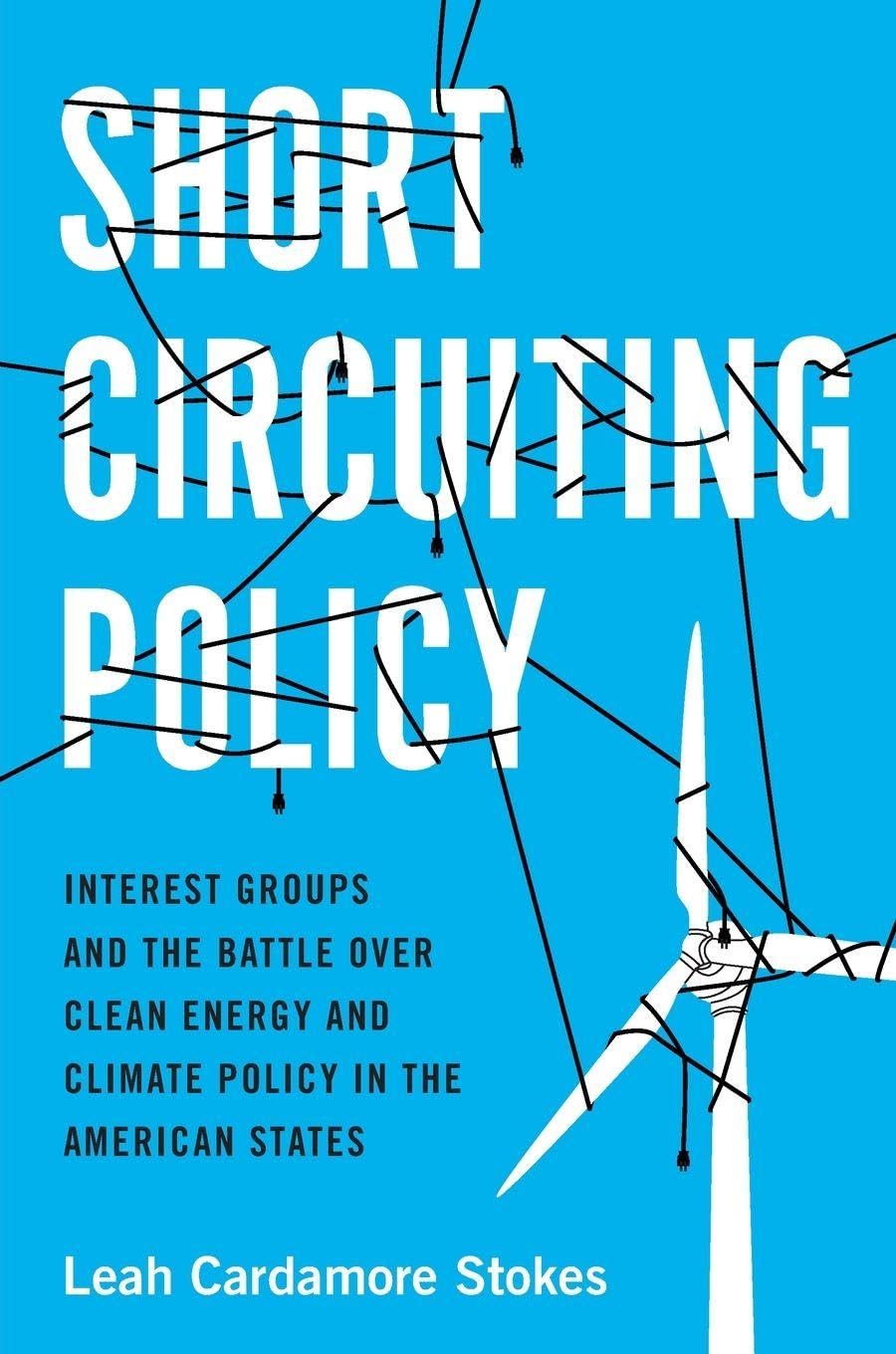
So, I've been in the industry for quite a while I've read a number of different books. I really like freeing energy, especially for newcomers. I think that's a great book, but for people who have maybe been in the industry a little bit longer, I highly recommend Short Circuiting Policy. It does a Leah Stokes wrote it, and she was integral in writing the IRA, and it really created fostered a passion for policy and policy communications for me. I think you know, oftentimes we're so focused on build, build, build that we're not focused enough on policy, which would allow us to build even more and better. So I highly recommend people picking that book up and understanding how policy impacts our lives. What I often say is, if we're not impacting policy, policy is impacting
Nico Johnson 53:52
us. Okay, Jessica, we're heading towards home base here. I have two more questions. Given that you, as a marketing maven, have your finger on the pulse, what are you watching most closely right now in the industry that you want to signal to others they should be paying attention to?
Jessica Fishman 54:06
This probably won't come as a surprise to anybody, but gas prices, data centers, and the Strand Hermos. I think how those are impacting energy as we know it creates a real opportunity for industry, and so I'm going to be watching who is ready to take advantage of that, and how are they doing it, and the other thing is the midterms, so all of these things tie together because they're going to impact each other, and how, how much is our industry going to be prepared for the midterms, and especially after the elections happen,
Nico Johnson 54:44
just because we wrap here, you know, when we look back on this phase of the energy transition, what do you hope people say that people like you and I helped the industry understand earlier or better, or how the work that you do helped change. Of the transition in a, in a marked way.
Jessica Fishman 55:03
I hope that we spark the imagination of people in terms of how energy can actually work for us versus against us. Right now, energy tends to be a drain on us, on families, on businesses, and if we spark people's imagination that that it can look really differently, that we can actually be participants of the end of the energy industry versus just being at its whim. I think we'll have achieved our goal, I think, or at least on the way to achieving it. The moment that people understand that the energy industry can work more like the like an Airbnb or like Uber, where we're actual participants where the the the herdle for entry, the barrier for entry is lowered significantly, then people will have will have dramatically changed what our infrastructure looks like.
Nico Johnson 55:55
I agree with you wholeheartedly, and I too hope that we see in 10 years time a nation that has embraced these ideals and, and the possibilities these technologies bring to us through batteries and software and hardware integration that we simply can't get with, not neither the old way of thinking nor the old way, the old kinds of appliances and power systems we have relied on that have gotten us to this point.
Jessica Fishman 56:23
Al Nico, thank you so much for having me. It's been a wonderful conversation, and I've really enjoyed my time with you today.
Nico Johnson 56:28
Jessica Fishman is one of the most trusted clean energy marketing advisors I know in the industry. She has been on the inside of campaigns many of you love and respect. If you'd like to reach out to her, we'll leave all of her contact details in the show notes. Of course, you can book time with her through the research through the other platforms that she has mentioned, and find her, please, on LinkedIn. She is a voice of reason, and she is insightful, and someone worth following. Jessica, it's been great to have you on the show, and we look to have you back soon, and we're grateful for you as well, taking time to be here with us all the way through to the end of another Sun Cast episode. You know, I often say I only ask you to pay one thing, and that's attention. That's because our sponsors pay the rest. They help keep the lights on. I'd love it if you go check out what they have to offer at Sun Cast dot media forward slash sponsors, of course, that's how you could find other ways if you are so inclined to partner with us and to reach our 1000s of listeners and viewers each and every week, twice a week, just like they do, communicate your message more clearly right into the ears of listeners like yourself, smart industry doers who are looking for that alpha on the front lines of the energy transition, that's what we're here for each and every week, and I want to thank you, because you are what you listen to. Thanks again for showing up, Solo Warrior. It's half the battle.

Nico Johnson
Entrepreneur & Podcaster
In my 20 year career, I've worked with dozens of entrepreneurs, intrapreneurs and professionals in transition to clarify their mission, set or stretch their goals, and work through the barriers to their growth.

Latest episodes
We’re Excited to Hear from You!
Don’t hesitate to reach out—whether you’re here to learn, share ideas, or work with us, we’re ready to connect.