
We'd love if you'd leave us a 5 ⭐ rating & review and it's never been easier: www.ratethispodcast.com/suncast
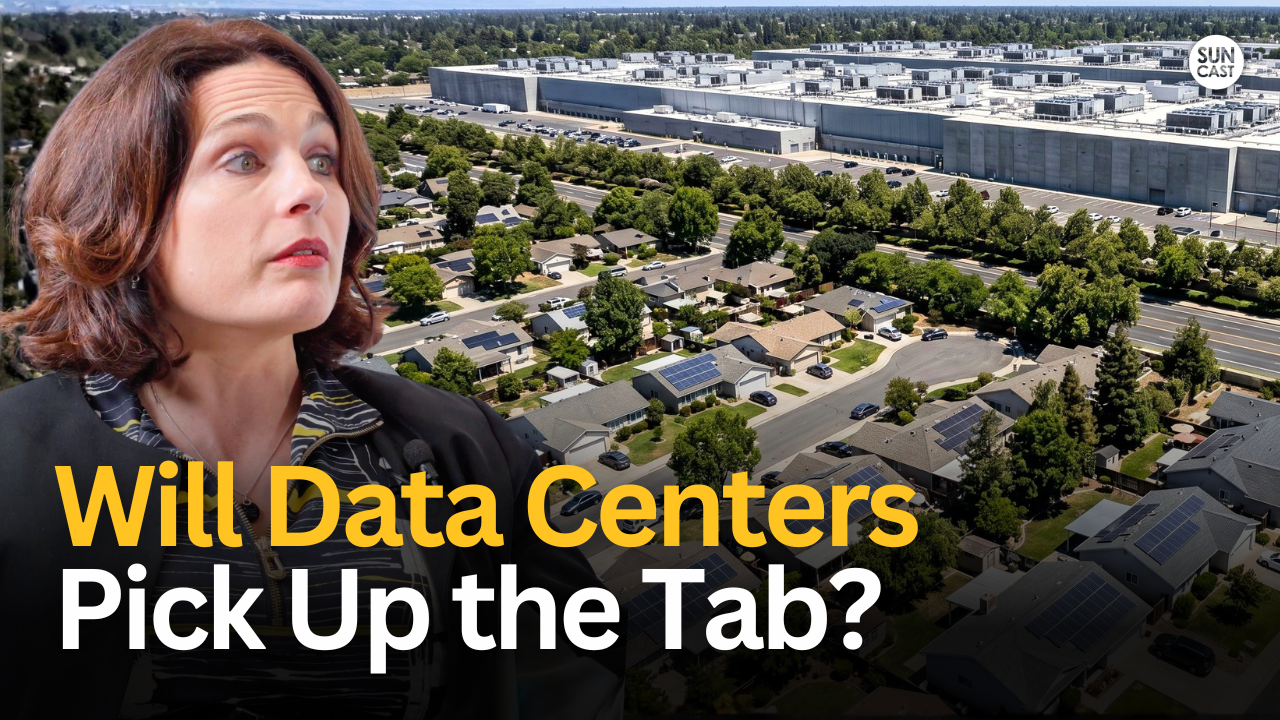
Everyone agrees we need more distributed energy. The harder question is: who pays for it?
That's the question Molly Bauch has been wrestling with.
As North American Connected Energy Lead at Accenture, Molly helped develop a new model that connects one of the fastest-growing sources of electricity demand with one of the country's biggest energy challenges.
The idea is surprisingly simple.
Data centers need community support and faster paths to power. Millions of low-income households need access to affordable solar and storage. What if those two needs could solve each other?
In this conversation, Molly explains how Accenture, Grid Alternatives, and a growing coalition of partners are creating a playbook that helps data centers invest directly in distributed energy, lowering energy costs for families today while laying the foundation for tomorrow's virtual power plants.
If it scales, this isn't just another financing model. It could reshape how we think about paying for grid infrastructure altogether.
Expect to learn:
🔹 Why one in five American households is now behind on their electricity bill
🔹 How data centers can help fund solar and storage deployment
🔹 Why virtual power plants may outcompete new peaker plants on both cost and speed
🔹 What still has to happen before this model becomes fully bankable
Whether you work in utilities, distributed energy, infrastructure, or data centers, this conversation offers a fresh perspective on one of the biggest questions facing the industry today:
How do we build the grid we need without asking ratepayers to shoulder the entire burden?
RESOURCES:
Connect with Molly Bauch:
Check out Accenture:
"One in five households are behind on their utility bills right now. We're at an all-time default rate for utility bill payment." - Molly Bauch
This Podcast is Free For You
Thanks to Our Sponsors
The following are Corporate Partners who have helped make SunCast possible:
Platinum Sponsor
The following are Corporate Partners who have helped make SunCast possible:

Noteworthy Quotes:
Molly Bauch 00:00
If you took housing stock and you deployed these DER, these dispatchable assets, right on them, you could satisfy all of data center peak load, right? And 40% of load growth over the next decade, right now, prediction is gonna be driven by data centers. Yeah, right now you're just seeing massive, massive load growth that's just taking utilities by storm, and they need better solutions, they can't just keep over building the distribution grid to satisfy peak, they need flexibility, right. So, said simply, this is a way to get data centers some social license to address affordability, to put resilient assets on the grid, and future-proof it, so that they can be flexible assets.
Nico Johnson 00:39
Affordability, namely energy affordability, is getting its day in the sunshine, finally becoming one of the biggest challenges and opportunities in the energy transition, something that we have got to address. The same time, solar storage and distributed generation, distributed energy broadly, are creating entirely new ways for us to power our communities, our homes, and support the grid. My guest today is working on new models that help connect private capital, distributed energy, and grid flexibility. Molly Bauch is the connected energy lead for North America at Accenture. It's so great to have you on the show,
Molly Bauch 01:19
Nico Johnson. It's a total pleasure. Long time listener, first time caller.
Nico Johnson 01:23
I love it. This segment that we're going to broadly refer to in connected energy is how we tie value to things. These ideas, this idea of virtual power plants, right? This, these connected batteries and generation assets, you're helping to launch effectively a new model that connects different actors on the grid, namely data centers, with the solar and storage assets for low-income households. Tell me more about this idea.
Molly Bauch 01:53
So, Accenture invested in a partnership with Grid Alternatives, who was a huge solar for all awardee. So, there were 60 awardees, mostly states, some nonprofits, and tribes, and it was the largest non-state entity. It got about three 50 million.
Nico Johnson 02:10
Yeah,
Molly Bauch 02:10
and it was going to be able to deploy mostly solar across this low-income portfolio, and it applied to solar for all, which you remember was a $7 billion low income solar and storage installation across the Inflation Reduction Act that got yanked back by the Trump administration is currently being litigated, so it applied with a whole host of low-income housing intermediaries, and it reached out great alternatives to Accenture, and said, look, we have done a year's worth of planning, we've pulled all of these incredible entities together. We were going to change lives of these low-income folks by putting power on their homes, and when you see just energy burdens soaring, right, one in five households are behind on their utility bills right now. We're at an all-time default rate for utility bill payment.
Nico Johnson 03:00
Wow, I didn't know that. Yeah,
Molly Bauch 03:01
and so low-income customers are about three times in jeopardy of regular households of being behind on their bills, and this was going to be a bomb, a salve, a solution for that. And so they said, look, is there any way that we can figure out how to find private sources of capital to continue deploying these life-changing technologies,
Nico Johnson 03:26
right?
Molly Bauch 03:26
And we said we, we think so, because if you also look at data centers, what's what's their chief mandate right now? Speed to power, that's
Nico Johnson 03:36
right,
Molly Bauch 03:36
they've got it, they've got to get it. What's the only thing that's bipartisan in this country right now? Bashing data centers. Yeah, Jigger was
Nico Johnson 03:44
just saying that a poll came out that said it's the, it has worse approval ratings than ICE.
Molly Bauch 03:48
No, no, shut the front door.
Nico Johnson 03:51
You've got to really
Molly Bauch 03:53
screw up, Lord Almighty. Wow, that is intense. Didn't, didn't know that. Yeah, I'm gonna quote that. So, if you want a way to get social license and community benefits out into the public. You fund solar and storage on low-income houses. Well, Enter Grid Alternatives, who had this entire coalition of low-income housing intermediaries that stretch coast to coast, north to south, right? And so our whole program is, how do you then take that portfolio and draw basically like concentrations of housing stock, where we can deploy these assets, get these data centers to fund them, right? And then give them attribution for fundamentally creating affordability, right, bending the arc of affordability challenges. So right now it's a pure social license play, but everything that we're deploying, Nico, is VPP enabled, so it's DC coupled solar and storage, so that solar powers that storage, and that storage can be dispatchable into either a retail or a wholesale market. That's not that's not part of the program right now, it's just making sure data centers are away. Of this incredible addressable market, and then simplifying how we actually get the customer permission structure and deploy the assets, and then give them the attribution for changing these folks' lives.
Nico Johnson 05:10
Okay, on behalf of my listeners, I'm not sure I understand. I saw, I saw, I saw a post, I saw a post by Rea Matusiak that was talking about how the data centers need to invest in the community, and like, they, they can basically lift us out of energy poverty. That's it. At the same time,
Molly Bauch 05:29
yep.
Nico Johnson 05:29
Is this that? So, Ari from
Molly Bauch 05:32
Rewiring America, and his crew wrote a paper relatively recently about how you could actually satisfy data center peak load
Nico Johnson 05:40
link to it. I'll do
Molly Bauch 05:42
the so rewiring was was fairly vocal about the fact that if you if you took doesn't matter low income just housing stock and you deployed these der these dispatchable assets right on them, you could satisfy all of data center peak load, right, and 40% of load growth over the next decade. Right now, prediction is gonna be driven by data centers. Yeah, right out, and you're just seeing massive, massive load growth that's just taking utilities by storm, and they need better solutions. They can't just keep over building the distribution grid to satisfy peak, yeah, they need flexibility. Yeah, right. So, said, said simply, this is a way to get data centers some social license to address affordability, to put resilient assets on the grid, and future-proof
Nico Johnson 06:30
it, so that they can be flexible assets. Okay, so what I think I hear you saying is, in order to build in my community, you're going to have to do the equivalent of build a civic learning center. You're going to invest into low-income housing by putting solar on it, mr. Data Center owner, and that is going to help absorb, like create a shock absorber, and allow us, instead of building a peaker plant for your data center, we now are building a distributed plant for your data center in the neighborhood you're going to occupy.
Molly Bauch 07:04
Yeah, Bob's your uncle, bingo. Except it's solar and storage, so think of it whereas the former IRA program was solar for all. Think of this as storage for all. Sure, because storage is dispatchable, you can still do flexible things with solar, but like, boy, can you get it on steroids and go to 11 when you get the storage piece.
Nico Johnson 07:20
Okay, again, I'm trying to think about how this actually works. We had a fun conversation where I was like, all right, let's tap into the fact that, like, all of America is built on the idea that capitalism wins. Sure, I get that this is meant to incentivize putting these distributed assets out there, but the question many are going to ask, especially listeners, is like, well, how can I be involved? Am I an EPC that gets to build it? Sure, is this going to be run by Grid or Solar United Neighbors in some coordinated fashion, or is it a free-for-all? Is there, like, money up for grabs? Is this a, is this a federal policy?
Molly Bauch 08:00
How
Nico Johnson 08:00
does it, how does it get down, trickle down into the actual economy? Yeah,
Molly Bauch 08:04
well, plagiarism is the highest form of flattery. So, if other people want to take and run with it, like, Godspeed, do it, because we need to deploy this capital and get these things out there. But this program, particularly, we're creating the playbook and the turnkey processes for Grid to act as just think of, like, the orchestrator that's calling it. Think of it like the, yeah, the program management office that pulls together the right private
Nico Johnson 08:29
program,
Molly Bauch 08:30
a private program. We're backed by Accenture right now, but we're creating, we're creating the processes, the capability, and the capacity for them to scale on steroids after us, right? Okay, because it's match, it's match.com right? I've got, I've got all of these houses, they're concentrated near where the data centers care about affecting communities, either because they signed community benefits agreement, now they're looking on a way to like achieve that, deliver those can deploy, or they need, or they need community benefits agreements, right, and so they're looking for what would constitute material impact to the community, from jobs to GHG. Yeah, well, I boy, do I have a solution for you, my friend, mrs. and mr. Google, mr. Hyperscaler.
Nico Johnson 09:07
Yes,
Molly Bauch 09:07
and so it's match.com and between where you've got data centers who need the permission structure or who have already been permitted and now have to deliver upon their promises, and then all of these potential assets. So it is, it is going to be hiring local EPCs wherever, right, Grid's really good at workforce development as well, so it can do it, can do training, it can bring people into the mix, and so it's basically the low-income community whisperer and an orchestrator that brings these pieces together, and so what Accenture is doing right now is creating the processes by which you find those houses, you engage those data centers, you show the business case, you connect the dots down to the EPC, you do the attribution from jobs to GHG in a, in a credible way, in a consistent way, right, that you can stand behind a ribbon cutting and be proud of.
Nico Johnson 09:54
I get that it has an immediate impact on the low-income families that have been. Be fisheries, exactly for all the reasons that you mentioned the outside of this interview. However, we are also, and in addition, we are also deploying essentially a VPP ready asset storage for all. What does it mean then for the grid if 1000s of homes suddenly become flexible energy assets? We're at that's seeing
Molly Bauch 10:19
right now with the rise of VPPs, it's the only thing everyone can talk about right now with flexibility, because it's 20 to 40% cheaper than a peaker plant to go and get a VPP online. You can do it three times faster, I can get it done in six to 12 months at 20 megawatts. It takes five to seven years for the same megawatt capacity for a gas plant, since we've got turbine backlog.
Nico Johnson 10:43
Yeah,
Molly Bauch 10:43
right. So, what it means is the grid is more resilient, things are more affordable. The more der you've got on a grid, you know, it's more resilient. Yeah, one of these things go down, I still have 99 you know, others.
Nico Johnson 10:53
Yes,
Molly Bauch 10:54
one power plant goes down, I do not have 99 others, right? Just in the wings, yeah. And so we're seeing more wholesale and retail markets like lean into VPPs, we still, we still have got to accredit them as capacity, but we're on demand response, they're on steroids right now, and so what it means is that things are better, faster, cheaper, gooder.
Nico Johnson 11:13
Yeah,
Molly Bauch 11:14
we get more of this stuff out there. Tennessee, a
Nico Johnson 11:15
lot of folks following what's happening in ERCOT as well, which now for years has had these flexible and flexible energy resources. Yeah, and we all, so therefore we already have market mechanisms in place, a petri dish of what this looks like in real life, where we're going to see more consumer side assets, more flexible assets, retail markets that open up. How, like, what's what's the future state that you imagine where these assets are inter operating in the grid, or like, are we going to get to a place where it's happens at a nodal level, like pricing algorithms,
Molly Bauch 11:55
that's that's the hope right now, so just, just with, so we have a whole host of incredible national housing intermediaries, it's Housing Partnership Network, it's NeighborWorks, it's LISC, it's even WRI, which has access to public housing authorities, you know, all over, and so it's just a, it's an incredible cast of characters, and I see those folks on the vanguard of unlocking affordability that reduces energy poverty, you're asking about the grid,
Nico Johnson 12:22
yeah.
Molly Bauch 12:22
And so, from their perspective, it's benefiting their, their housing stock, and that's that's an almost infinite number right now. Like, we've already got gigawatts of capacity in under management, if you will. Yeah, I see that as almost limitless in terms of what you could bring to the mix, Nico, and we are talking about to some very large aggregators in Texas right now about bringing this stock to them in Texas, because it's ubiquitous, it's national. What I see is that when you get VPPs really on steroids, beyond just classic demand response, you do have nodal congestion relief. It's not just peak demand shaving, right? It's not just capacity as a demand response asset, but you can actually create, you know, energy inject, and so, so there's there's lots that you can do. The VPP use cases are nearly endless, but you've got to deploy the DER, and that's not cheap or cheerful or easy to do. Yeah, and this is trying to compress that complexity and make it affordable.
Nico Johnson 13:17
Yeah, for anyone who is unfamiliar with the acronym, DER is Distributed Energy Resource Common, uh nomenclature associated with edge grid resources, so solar on homes, batteries on homes, but particularly the ones that are controllable loads.
Molly Bauch 13:32
That's it.
Nico Johnson 13:32
How long has this taken for you to pull it all, pull these stakeholders together? I mean, this is a gargantuan project.
Molly Bauch 13:39
Well, it's a, it's been multiple months in the making. We originally tried an actual non-social license grant option. We tried to get banks from, you know, all the large ones to invest, and the incentive structure with VPs aren't quite there yet for full paybacks, so I couldn't quite make the math quite
Nico Johnson 14:03
bankable.
Molly Bauch 14:03
I just wasn't quite bankable with the low-income community. Okay, so you can see it on large CNI assets, right? Does that mean
Nico Johnson 14:10
because it's just hard to collateralize? It's
Molly Bauch 14:11
super hard to collateralize, and you've also got, you know, risk because it's low-income customers who might not be in the same house if they're tenorant, and so we couldn't quite make the math math. We think we will make it more durable in just a few years from now with market reforms, but and that's why I went through the pure social ice holds the
Nico Johnson 14:28
risk,
Molly Bauch 14:28
that's right, but right now we're deploying the assets, we're getting them out there, right, and then once the VPP is whether or not the incentive structures come around, then you've got something that you can enroll and you can make extra revenue on
Nico Johnson 14:40
beyond the social benefit and license that it affords, does this directly benefit a data center? Is there is there a world where the data center has to actually build fewer behind the meter resources for themselves because they strengthen the grid around them
Molly Bauch 14:57
at our current scale, not you. Right, so do you buy every time you deploy der on the grid, you increase the total capacity and they reduce the strain, for sure you do, without a doubt. But the utility is not coordinating with the data center to give them any kind of, you know, credit resource credit. No, don't worry, those conversations are all in the ocean, right?
Nico Johnson 15:20
You use resource credit, but resource adequacy is exactly where we're headed. It's like
Molly Bauch 15:23
that is exactly that is that is what we are trying to create the proof points for. Right, you do this, you do this at scale, you've got enough resource adequacy, you've got enough capacity accreditation. There's lots of plays that we're exploring. The fastest way to do this, though, was through pure like just grant-based, get the der out there, make them ready, and then have those hard conversations, because every utility is a special snowflake that works in a special way, and so we didn't have time. This is this is an Accenture investment, so it's all pro bono. So we didn't have time for all the various machinations and conversations to play out. So at least this gets it started.
Nico Johnson 15:59
Yeah, if the momentum that you're seeing, where it seems like after a few false starts, this is getting into a model that you believe will work. If this model scales, how does it change the grid, even on a nodal or micro level, 10 years from now?
Molly Bauch 16:15
I think the grid is heading towards a decarbonized, decentralized, digitized future with DPPs at the heart of it, because otherwise you know pass can't be prolog, brother. We just like you're seeing distribution and transmission costs, but particularly distribution costs be like the primary drivers of your rate volatility and your rate rises. Like, we need more flexible assets. This is a way to do that, and no one's cracked this nut, because resi is hard, there are 10s of 1000s of resi, whereas I can just do a couple 100 CNI customers, commercial and industrial customers, and I can get the same kind of like bang for my buck, right? This is, this is harder, but by God, does it affect communities and humans a lot more, and so if we can create the template to find these homes, get the permission structure, deploy this, and simplify all the complexity. There's a reason that this hasn't. It's sitting right there. This is this addressable market. There's a reason like this is not for the faint of heart that folks haven't done this, working through all these housing intermediaries, working through the volatility of a low-income community that couldn't afford the luxury of solar and storage, because let's be clear, it's for those who can afford it. That was a value proposition of solar for all, right? That just vanished, and so what I'm hoping is that this becomes bankable, investable, and no regrets for investors who want to come in, because we create the infrastructure to deploy this capital and change these folks' lives, so it benefits them, it benefits whomever that off-taker is, it obviously benefits the grid from a tax base, there's jobs to GHG that on the upside, so it's there's a lot of process involved. We're trying to like standardize and simplify, but you asked what the future potential is. It's limitless, like unfortunately we have an abundance of poverty everywhere. There's no scarcity there.
Nico Johnson 18:01
Yeah, I think that this is like many great ideas birthed here. This is a model that will, we're going to see scale abroad much faster than we see it here, because the bureaucracy of, and the sort of disconnected nature of how our utility grid works.
Molly Bauch 18:18
Maybe, Nico, but like, what's what's like also one of the only bipartisan sound bites, affordability.
Nico Johnson 18:24
Yeah,
Molly Bauch 18:24
right. So, what are people looking for in an affordable solution? Well, you know, on the right, it's energy independence, or get great solar and storage, phenomenal. Yeah, everywhere it's affordability. How do you get that? You put more DER with clean energy in a distributed way, so the grid's more resilient, and so you don't have to overbuild it, right? Yeah, so those things are, I think, I think I'm a little more optimistic. Yeah,
Nico Johnson 18:49
here's what's really interesting, and I'm optimistic as well. I think that the model that you are pursuing, which is empowering, which is actually just bypassing in some ways regulation and empowering private sector to be incentivized to want this to happen, so we did some numbers as we just sort of ran the numbers on balcony solar as it was starting to get more popular, and we're hearing like the whole thing about balcony, like three gigawatts deployed in Pakistan, for God's sake, like if the state of California, as an example, were to say, all right, we put 800 800 watts, two panels on every balcony in California, for those families, it would be the equivalent of, it'd be like the equivalent of Alaska, like those families receiving $1,000 stimulus check a year
Molly Bauch 19:44
for the
Nico Johnson 19:45
life of that asset, that is such an un like it's an unbelievable return on investment and reward, not all, not just in social capital, in real meaningful local. Economic reinvestment,
Molly Bauch 20:01
that's right. Yeah,
Nico Johnson 20:02
and that's essentially what you're asking Google to do in every neighborhood that they are building a data center
Molly Bauch 20:08
with the future potential of bilateral PPAs for capacity, of course. That's exactly right. So, there's there's.. it's a gift that keeps on giving.
Nico Johnson 20:17
Beautiful. Can't wait to see how this project really bears fruit. Thank you, Molly Bauch. Thank you so much for taking the time to come by.
Molly Bauch 20:27
Thanks, Nico. You're a gem. Enjoyed it.
Nico Johnson 20:29
Hey, thank you for tuning in. And if you are going to one of our other upcoming events, please swing by our live stage and say hello. I do love meeting you in person. You could actually find out which events we're going to be at next at SunCast dot Media, and click on the events tab. As I mentioned in the beginning, twice weekly we deliver conversations with founders and leaders on the front lines of the clean energy transition, more than 800 so far and counting. And we're here bringing this content to you each and every week, free of charge. Of course, it's not free. Our sponsors help pay the bills and keep the lights on, so that we can help you build your legacy in the clean energy transition. And so, if you'd like to say thank you to them, or learn more about what it is that they bring into the world, or perhaps see how you could reach 1000s of listeners twice a week, just like they do, check it out at SunCast dot media forward slash sponsor. Remember, you are what you listen to. Thanks again for showing up, Solar Warrior. It's half the battle.

Nico Johnson
Entrepreneur & Podcaster
In my 20 year career, I've worked with dozens of entrepreneurs, intrapreneurs and professionals in transition to clarify their mission, set or stretch their goals, and work through the barriers to their growth.

Latest episodes
.png)
We’re Excited to Hear from You!
Don’t hesitate to reach out—whether you’re here to learn, share ideas, or work with us, we’re ready to connect.