
We'd love if you'd leave us a 5 ⭐ rating & review and it's never been easier: www.ratethispodcast.com/suncast
Utilities used to plan around relatively predictable demand. That assumption is disappearing.
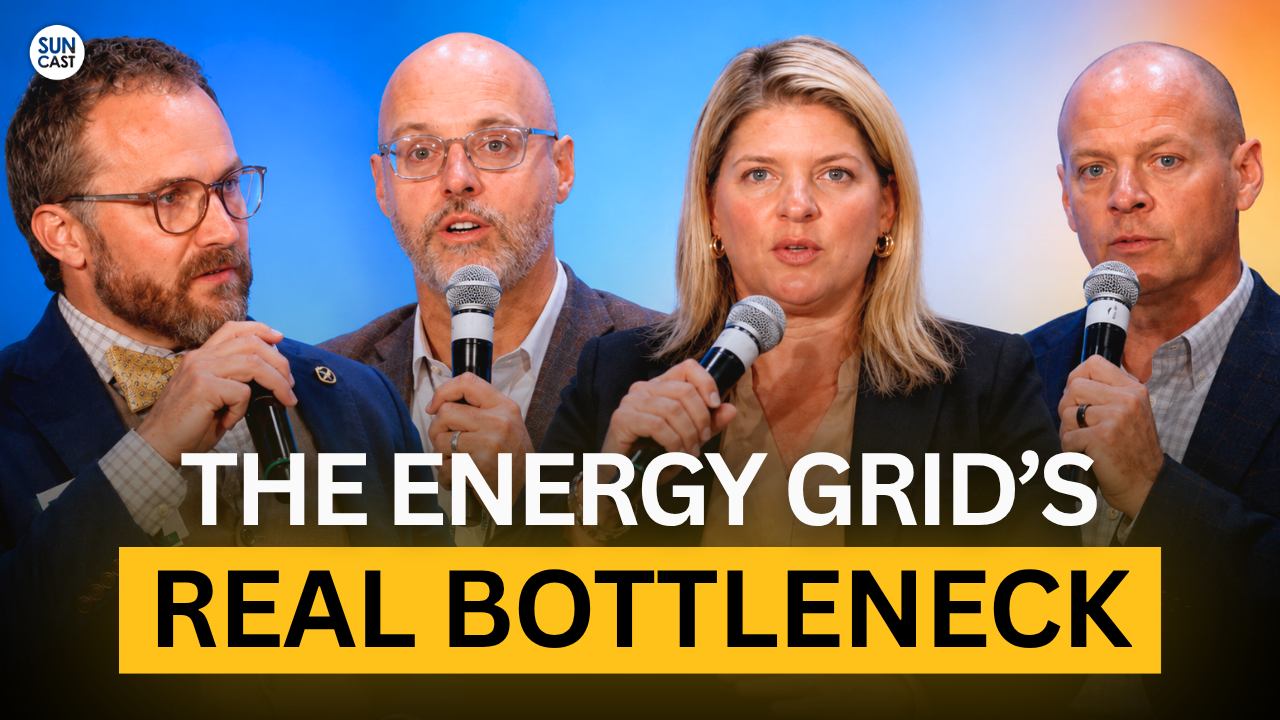
In this opening keynote from Intersolar & Energy Storage North America Midwest, Nico Johnson sits down with 3 utility executives; Bria Shea of Xcel Energy, Andy Plenge of ComEd, and Brice Sheriff of Ameren Illinois to examine what happens when electricity demand can arrive faster than the infrastructure needed to serve it—and distributed energy resources increasingly change how power moves across the grid.
The conversation explores the difficult balance between reliability, affordability, and investment; what rising electricity costs actually reflect; the practical constraints to deploying more DERs; and how utilities are rethinking planning for a system with far more uncertainty than the one they inherited.
Three utilities operating in different markets arrive at a similar reality: planning the next grid will require more flexibility, better coordination, and new ways of thinking about both customers and the resources connected to the system.
RESOURCES:
Connect with Andrew C. Plenge:
Connect with Bria Shea:
Connect with Brice Sheriff:
Check out ComEd:
Check out Xcel Energy:
Check out Ameren:
This Podcast is Free For You
Thanks to Our Sponsors
The following are Corporate Partners who have helped make SunCast possible:
Platinum Sponsor
The following are Corporate Partners who have helped make SunCast possible:

Noteworthy Quotes:
Andy Plenge 00:00
After the initial spike in gas prices from the Russian invasion of Ukraine, prices were around $30 a megawatt hour. That's your sort of energy price plus a capacity adder. This year, we're on track for $70 a megawatt hour. So that is an over doubling of our supply cost, which is you know about half our bill.
Nico Johnson 00:22
For much of the last decade, the conversation for most of us have been about deploying as many renewables as possible, and the grid is becoming more complex as a result. Utilities are navigating changing demand patterns, evolving customer expectations, affordability pressures, increasing levels of distributed energy resources, thanks to all of you, and growing expectations around reliability and resilience. We're fortunate this morning to have leaders representing three different utility perspectives across the Midwest, and I'm excited as you all are to learn from each of them. I'm going to let each of them briefly introduce themselves as we get started. To kick us off, I'd love for each of you to briefly tell us who you are and your role, who you serve, and then answer this question from your perspective: What has changed most dramatically in utility planning and operations over the last three to five years? Let's start with you, Bria.
Bria Shea 01:13
Sure. Thanks, Nico. Morning, everybody. I'm Bria Shea. I'm the president of Xcel Energy for North Dakota, South Dakota and Minnesota. I'm headquartered in Minneapolis, so not too far away. Glad to join you all this morning. Excel serves eight states, so along with the Upper Midwest, we also serve Colorado, New Mexico, and Texas. And as you think about kind of the geographic layout of that, we are blessed from a renewable perspective that we have rich solar and wind in, or both in every one of those states. So really well positioned. We are early adopters of wind, and now increasingly improving our solar position as well. So I think from a renewable perspective, we have a great starting place to kind of get into this energy transition, and so Nico, to your question about what I think is the biggest change that we're seeing right now is first, it's the size and scale of the load growth. Right, we used to have slow to no to fairly easily predictable load growth, and now we're not sure when it's coming, where it's going, and what the size of it is. So certainly, that is influencing as we think about the future. And we're not just adding new load growth; we are also in the middle of retiring our coal and moving away from some of that centralized generation that we've previously relied on, and so taken together, those two things are really changing. I think the way that we are thinking about all of this, and so when Excel is thinking about these technology companies, in particular, if I'm thinking about hyperscalers or even you know manufacturers and some of those significant sources of load growth, they are moving at the pace of technology, we cannot be moving at the pace of infrastructure, which is what we've historically done, right? So, thinking about how you tackle this, Excel's thinking about that in three ways, and that's first, we're thinking about speed. We've really changed how we plan. We're not just doing generation and then transmission and then distribution, right? We're doing all three all at once, and reliability used to be: do you have the enough generation to serve your customers? Now it is: do you have the right generation in the right place at the right time? So it's that deliverability factor that is really, I think, the crunch point. So certainly, we're thinking about speed, planning all of those things in tandem, so that we can move as fast as possible. Next is simplicity, really getting the rules right. So as we're thinking about permitting reform or making sure that Excel understands how we can move forward, so that we can set that same expectation with our customers and regulators, and one example of this, for instance, is we've filed large load tariffs in almost all of our jurisdictions, which basically are just setting the parameters for how we intend to add those large customers, like a hyperscaler. And I'll talk a little bit more about that, I think, here later. But really, it's just to if you want to do business with us, this is what it looks like, and so I think you get some a significant gain in simplicity that way. And then last is just scale. We're thinking about how are you leveraging all of the tools, the people, the programs, the technology to make sure that we can meet this, you know, opportunity of a lifetime. It's not just one program; it is the entire one project. It is the entire system, right? And so I think I'll end there now.
Nico Johnson 04:47
Thank you, Andy.
Andy Plenge 04:49
Yeah. Thanks, Nico, and good good morning, everyone. Thanks for inviting me here. I am Andy Plenge. I'm our Vice President of Strategy and Energy Policy at Commonwealth Edison. ComEd, as it's known here, we serve Northern Illinois, which is predominantly, from a population perspective, the city of Chicago. So we serve 70% of the total residents of Illinois by virtue of that, but a but a kind of smaller portion of the Illinois geographical territory. We are solely electric, and we are T and D only. So the wires and our generation is procured from the PJM Marketplace, which I'm sure we'll we'll spend some time talking about today. And then you know my role within the company is I oversee our energy procurement function, so interfacing directly with the Illinois Power Agency. I also have our clean energy solutions business, which oversees our energy efficiency and demand response programs. We think our energy efficiency program is probably the largest utility one run one in the U.S. So it's we spend about 450 million a year, which has been a been a huge benefit for our for our customers. And then, lastly, I have our our strategy team, which kind of thinks about how to navigate the increasingly complex world. Which which gets gets me to the the question at hand. I think you will unfortunately, Bria hit hit a lot of the points I would make. Load growth and and distributed resources for us are absolutely kind of some of the the biggest one. So a couple like nuances to that, and then one additional point I would make. One, you know, Illinois, Chicago in particular has been, you know, I think we we put up our first or hosted or connected our first data center in 1999. So Chicago is is sort of one of the top three to five data center markets in the U.S. So we are kind of in some ways ground zero in the scale of what we're seeing and have been seeing over really the last couple of years. You don't even have to go back five years, which is incredible to start to think about how much the the world has changed. You know, we've got about a peak load which we hit in 2011, which is which is still the the encouraging data point. You know, we we aren't even where we were back before energy efficiency really ramped up was 24 gigawatts and we have at least that if not more in kind of some various stage of of inquiry from our customers so we've got a lot a lot happening there on the load growth front I'll I'll kind of reiterate something that Bria mentioned in the way we've thought about it is, you know, that it to to kind of build a data center, get that online. You know, you can kind of do that in like a you know 24 month timeline, just in terms of building the shell, getting the chips, all of that. When people talk about what it takes to get a gas plant online, as an example, you know, that's five to seven years, and I think we have really taken for granted that you know you would sort of see the the load growth, the PJM market would sort of run the auction, and it would all kind of work in sync, and that's just really not happening anymore. Jealous of Brice and I were talking about jealous of bria's ability to sort of plan that all together. We are working through that here amongst all the stakeholders in the PJM marketplace, but that's going to be something to to navigate. Distributed resources, I imagine, we'll talk touch a little bit more on. But the last one I'd mention is what's really changed is Illinois has made a big shift towards kind of a multi-year planning framework that was brought in as a result of CJ, and so one thing we've we've done and been able to do is from from a planning perspective, start to think about what's our next sort of four years of investment look like, and lay that out and get alignment with our stakeholders and ultimately the commission to invest.
Andy Plenge 08:34
And so operating under that framework, understanding how to explain why things don't play out exactly as you expected, four years out ahead of time, and and you know we're in our first cycle of that multi-year planning framework has been a learning opportunity for us, and it's really forced us to start to kind of plan multiple years ahead of time in order to make sure that we're marching along the the path that our our regulators agree is appropriate. So I'll end it there. Thanks, Andy. Brice.
Brice Sheriff 09:02
Yeah. Good. Good morning, everyone. BriceSheriff. I'm senior director of regulatory affairs and energy supply for Amherst, Illinois. So in that role, you know, obviously all the regulatory matters. I'm kind of the liaison between the ICC as well as staff, working through a lot of stakeholder processes, which I'll touch on here a little more later, and then the energy supply. We we have both gas and electric in Amherst, Illinois. So about 1.2 million electric customers, 800,000 gas customers. My office, we don't we're a T and D as Andy mentioned as well. You know we purchase all the electricity, all the gas work with the hedging strategies around that in Illinois a little different. We work through with the IPA on hedging for our capacity, and then in the end of the day, we're we're buying that through the MISO capacity auction. You know, as it relates to planning and how that changed. Andy touched on a little bit, right? The Ceja, it wouldn't be in Illinois if I didn't bring up CJA. The CJ legislation that was passed really set forth a planning mechanism for your planning cycle that you know really sets the stage for what utilities are going to look like as we as we plan these things out over the future. I was reflecting on you know just the amount of time and energy that goes into these stakeholder meetings, and I'm sure there are several of you in the audience that have been part of those discussions. Right? It's it's a little bit exhausting sometimes. I look back in 2023, and we held roughly 20 meetings prior to the filing of the grid plan. This last grid plan in 2026, we hosted 105 meetings. That's not hours. That's meetings. We had 52, you know, topic-specific multi-year integrated grid plan discussions. So, you know, the the planning from when I started with the company, Bree and I were talking earlier. You know, I've been with the company about 12 years now. It's like night and day to what the the way it used to be, the way utilities did their planning, and that was a policy set forth by by the governor of the state and the General Assembly with CJ that we're going to make this a very robust stakeholder driven process. You know, we look at this as a partnership with all of you, with the renewable community, all the stakeholders out there. Right, we encourage people. I mean, many of you are in those meetings. There's a lot of folks that have a lot of different opinions. It's challenging sometimes, and it can be frustrating for everyone. But at the end of the day, I think we need we need these partnerships, right? We need to get on the same page of how we're going to continue to progress and move into the future. The last thing that I'll mention that we're kind of getting into on the on the planning process is obviously the integrated resource plan. This was set forth in the Surja legislation, which just went in effect june 1, but we have been engaged with the commission. I know Comed as well. You know, having these discussions, thinking about this. This is this is kind of a foreign thing for us, right? We haven't we haven't done planning to this extent in a long time since deregulation in the state of Illinois. You know, I think that the planning aspect of it is, and particularly the integrated resource planning of it is going to be critical to make sure we have reliable energy. Number one, and make sure that it's cost effective for customers. We hear a lot of things today out there on customer affordability and impacts of it. And really, I think it's a tool that we can use. You know, as we continue to move towards new legislation, new new ideas that we can point to General Assembly members. We all know these these these topics are complicated, right?
Brice Sheriff 12:26
There, it takes years to fully digest them, and then we're asking General Assembly and and and policymakers to make decisions with somewhat limited understanding of what the situation is. So, having an IRP, a document that you know they can kind of, you know, I'm an old sports guy, so the X's and O's. Like, look at what we need to get to the place we want to be in the future. I think that's that's going to be key.
Nico Johnson 12:48
I'm curious what assumptions about the electric system perhaps long held no longer hold true. And I'm going to drop these questions for you guys to just sort of popcorn answer as you see fit.
Brice Sheriff 13:00
We we can kind of look around and figure out who's the answer. So I'll I'll dive into it. So from our perspective for Amer in Illinois, like we're we're a little bit different than ComEd. I don't know if I shared earlier, but we're obviously you know we're I 80 South. So you know it's 44,000 square miles. We have a system that was built you know 50, 6070, maybe even 80 years ago, and the system was designed with small generation. You know, a lot of that was coal. You know, Southern Illinois used to be one of the you know a very strong coal environment, which has now retired. Right, and we had a lot of these generating generators located throughout our service territory that were designed to move power. You know, 1520 miles. Well, you fast forward to today, right? That those are no longer there. We're asking the system to do a lot more with DER and two-way flow. So, from my perspective, you know, things have have really changed dramatically. You know, over the last 10 years, and and probably will even more so. You know, as we continue to go in the future,
Andy Plenge 14:01
this idea that it kind of relates to kind of the level of investment needed. You know, historical weather is sort of predictive of where we're going to be here going forward. I think it's become much more challenging to predict. You know exactly when storms are going to hit, how hard you know how hard they're going to hit, and in general, I think you know thinking about you know weather as something a little bit more kind of within the within a certain bandwidth that that you need to plan around. I think we're going to need to really challenge those assumptions in terms of looking at historical weather as a predictor of what we'll be facing over kind of a longer planning horizon. So, from our perspective, I think that's something we're really thinking about, not just terms of level of investment, but also how you run the business, how you think about kind of resourcing storm activity or anticipated storm activity. That's that's one we're dealing with. Otherwise, would would you know kind of go back to the load growth element? You know, that's very different in terms of what we need to assume. Two way power flow. Absolutely agree with with Brian. And then I keep thinking about this idea that load growth can can move much more quickly than supply at the moment, which sort of gets, I think, to to this group, which is the ability for distributed resources, including solar, to help solve that.
Bria Shea 15:15
I'll maybe take that question from an external perspective about what I hear from customers and what you know, Bricementioned too about affordability, right? That is the front page of the newspaper about five days a week these days, and and I think from an energy perspective, there is a misconception, misperception that it's data centers driving that, and I think first of all, affordability is regional, from Xcel Energy's perspective. Given our diverse energy mix, our early investment renewables, our rates are about 30% below the national average right now. In my opinion, we do not have an affordability issue in our states. That said, that is the general perception, and then you ask people, or they ask you at a dinner party, which is the reality of where we are right now. Right, that energy is the is a party topic, and they're saying, why are these data centers driving up our costs? And again, I understand the difference, you know, in the the markets and the regional impacts we're seeing here. But for Xcel Energy, our data centers are doing the opposite, and in fact, they are paying their own way. They are driving down costs, and so we can get into that more later. But again, when I think about a misconception that I hear frequently, it is the data centers are driving up costs, and I think if you do it the right way, the the opposite can be true. And and in taking it one step further, I think they can solve our affordability problems.
Nico Johnson 16:45
Utilities have to balance a lot of competing priorities, and as we've heard, you all have different perspectives as utilities on what those priorities mean in terms of whether you manage sort of where you sit in T and D generation, etc. but a consistent theme across the country is this concept of affordability, and I'm going to use it as I'm intentionally using the word concept because I think it means something very different depending on where you live and what the nature of your business is. How are utilities, from the perspective, the three perspectives you bring, balancing the the affordability that we see in the headlines every day with reliability and the investments that are needed to prepare for the future we see coming.
Andy Plenge 17:30
You know, there's a there's maybe two big angles we think about how we're we're balancing it. One, you know, Illinois has laid out a pretty clear framework for how to how to think about this, which is what we're working through here as part of our our first grid plan and our subsequent grid plan, it took it took a took a couple tries on the first grid plan to get that through, but settled on a framework. You know, one we have we kind of think about things as a kind of share of wallet. So there's a framework here we have in Illinois that that we follow. The expectation is you know affordability as measured by by that benchmark, you know is is share of share of wallet should be you know no more than 3% If you're not on space heat, if you are on space heat, that that that rises to 6% And so when we've been filing our proposed investment frame, you know investment plan here under the grid plans, we've been keeping an eye on that. We are at about half that level, so about one and a half percent currently. So that helps make sure that we're thinking about things in a manner consistent and with with the way our regulators want to think about it. Secondly, they've required a cost benefit analysis for all the investments we propose. So there's hundreds of of investments we propose as part of these multi-year plans, and we need to essentially kind of look at each single one, and and you know anything of any material size goes through a framework that we've we've established. That you know if you can quantify the benefits, lay those out. If it's regulatory required or something you have to do, we still have to look at kind of least cost approach to doing that, so that's another one that helps us make sure that we're calibrating affordability amidst you know other needs like reliability, et cetera. So that's on the regulatory front. Then just within the business, you know, one one thing we're doing is really making sure we can accelerate the adoption of of distributed resources. You know, when you think about one of the the challenges around affordability, half the bill for us, and and similar to Briceat least, given we're deregulated, is is basically supply costs, which are a full pass through for us. Just for a point of reference, back in 23, you know, after the initial spike in gas prices from from the Russian invasion of Ukraine, prices were around $30 a megawatt hour. That's your sort of energy price plus a capacity adder. It's now you know this year we're on track for $70 a megawatt hour. So that is an over doubling of our supply costs, which is you know about half our bill. That is truly. You know that pace of increase and the volatility we're seeing there is is what drives some of the kind of you know energy, no pun intended, around kind of where where power where utility bills are. So we are rapidly trying to you know it takes as I mentioned a while to get centralized resources online. We you know Illinois is working through a process to plan that out, but in the meantime, the best thing we can do-it doesn't take a long time to get solar on your roof. It doesn't take a long time to even get solar out in kind of a more just more like a community solar application. So accelerating that along with storage is one thing, and then lastly, customer assistance always been been an important part. We connected customers to over 100 million of of customers of of assistance last year, have a low income discount program as well. Just launched a two and a half million small business initiative. So all of those things have to kind of come together in our perspective.
Nico Johnson 20:55
How refreshing to hear a utility executive tell you that you're doing your job well and we need to do more of it,
Andy Plenge 21:01
Brice. I know my audience. Yeah,
Brice Sheriff 21:03
I'll I'll say ditto to to a lot of what Andy said. The fortunate thing or unfortunate when you're you know under the same regulatory framework, you know a lot of the things are are true for us. You know maybe I'll think about it a little bit differently from this perspective. While you know affordability is always top of mind, right? So running our business in a in a way that we as a company are looking for efficiencies, right? How do we keep the O and M line low? How do we we we embrace new technology, AI, where applicable, right, to run our day to day operations and really try and and and start there with keeping our cost as low as possible? Because as Andy mentioned, you know, 50% of the bill is essentially out of our control. And I will tell you, you know, the grid plan and all these proceedings that are taking place-it's challenging, right? Because we're we're all here. We all like to talk about the DER and bringing more DER, but we can't lose sight of of what the true one of our true needs is, and that's to provide reliable power. We've seen these storms. What does that take? It takes a lot of investment from the utilities. The weather patterns are getting more extreme. You know, I was at the summer preparedness at the ICC the other day, and I stole this information from from another person. So, but so if it's incorrect, you can blame them. But essentially, this year, I think as of we said here today, we've had 140 tornadoes, roughly, in the state of Illinois, we always used to think about the West, or at least I did as a kid. That the Oklahoma, you know, that area was more of the the tornado alley. I think as of May or April, they had like 50 tornadoes, and we've got another round of weather coming. So I say all that because I think you know as we continue to move down this path of DER integration and a clean energy transition, we have to ensure that customers have reliable energy, you know, provided at their homes and businesses. And without making those right investments to ensure, you know, these new technologies, you know, composite poles, things like that, the storm hardening backbone of the system, you know, we can get kind of out of balance a little bit with what we're trying to do,
Nico Johnson 23:03
and Bria, you all control the full stack. How how does it does it look any different for you in Excel?
Bria Shea 23:09
No, I think what the these guys said really resonates with me, and what I would say too. I mean, certainly when I think about balancing priorities between reliability, affordability, and sustainability certainly those three are increasingly in tension, and so none of we must maintain all of them certainly. And I think again, I mentioned that Xcel Energy's prices are about 30% below the national average. We also have a reliability rate of 99.98% and have reduced carbon emissions by almost 60% across all eight states, and even more than that in the Midwest, we're at about 80% So I do think you know we are making incredible progress, but also that potentially we've already done the easy work, and from here it's just more and more complex, right? So I think about the the overused phrase that we're thinking about, and all of the above approach, right? We've got we've we've got our centralized generation. Certainly, though we are moving away from coal, we've retired a couple of our coal units already, with a goal to get all of them off by 2030. We are adding some new gas, right, to meet that flexibility need when the renewables aren't there. It obviously has a lower carbon emission profile than coal, but has you know not as clean as probably we would like. And then I think about DERs and the opportunity there. Excel's got one of the largest solar programs, community solar gardens programs in the United States. We also are thinking about new partnerships and new programs, and with that, we've got this Capacity Connect program that we are rolling out right now, which is really a distributed energy, or sorry, a stoler storage program, whereby we are looking for community partners to site storage at, and then we would own it, but store it at their sites, and then we would aggregate it. In time of peak grid needs, what that has done is not only allowed us to continue that all of the above approach and really look in the nooks and crannies of the grid. Right, we're looking for optimal locations to site this so that we have minimal distribution upgrades needed. Hopefully, where we're actually able to site these, but it's also bringing new partnerships. So one of our first customers is a church, a Baptist church in a environmental justice zone, and so it's really you know it's serving underserved communities and partnering with them. It is allowing us to better utilize our grid and is meeting the reliability and deliverability issues that we are struggling with right now. And so I think as I the question about balancing these certainly again all increasingly intention, but it's just requiring us that we get more creative. You're cutting your own M. You're looking you know for the most critical capital needs, but also looking for new partners and and ways to generally move faster while we keep the lights on.
Nico Johnson 25:59
You mentioned earlier, Bria, the misconceptions about what's driving electricity costs, and I'm curious from from you all's perspective, what factors are often overlooked in that in this discussion around what it actually costs to deliver affordable electricity to homeowners and businesses.
Andy Plenge 26:15
Yeah, I'm happy to start. I I had mentioned, you know, I was thinking the same thing. This you know misconception on kind of whether large load is sort of good you know bad like you know there's sort of a knee jerk reaction but if you know it's it's certainly challenging us to think differently I think that's been a lot of the theme of this of this topic you know the unfortunately creating rates to recover costs is is not super straightforward, and there's a big timing element to it as well. And one of you know one of one of what we're seeing is is essentially you know the the ability and time to get this load online is different than sort of well one when does it actually hit full full load? So there are ramp ups to any of these projects. So you're usually making your upfront investment early on to you know ultimately serve the final expected load, and so you know some of that cost may start to hit rates kind of right away before you fully spread it over the load is one thing, and then I you know obviously the supply side essentially all that load largely absorbed the excess capacity in the PJM market, and so until the the the supply side has a chance to respond, which you know I think that has not moved as quickly as people would like, which is why you're seeing some initiatives at PJM to to drive more kind of accountability and response there. You won't necessarily see the ultimate result, and you know these are 40-year lived assets. So you know the verdict will take some. You know we won't know until 40 years. Sort of, you won't have the full benefit of seeing it, and so we're reacting to kind of the near-term constraints of that timing disconnect I mentioned. So that's one thing Bria mentioned, like large load tariffs. I think a lot of utilities are looking at creative ways to protect customers. One of the things we did that I think is is worth pointing out is what what we call a transmission security agreement, which is essentially we're requiring these large load customers to essentially put you know commit to a 10 year revenue recovery for their investments, you know, people will talk about well, they should pay for the costs they cause. You know, we've got well-established frameworks where we've actually done studies. If you just make them pay the costs they directly charge, you are not nearly going to recover. You know, almost near, almost in every case, you're not going to recover nearly as much as you will under the existing sort of network charge rate that we have in place, and so we require them to commit to 10 years worth of that recovery, which more than offsets you know the amount of investment we're typically directly making and protects customers to the extent it doesn't play out. So that's that's the way we're thinking about kind of protecting against these large loads.
Bria Shea 28:58
Sure, maybe I'll just talk a little bit about the Google deal that I mentioned earlier, because I think it's a good example of how you can protect existing customers and actually bring benefits. So this this Google deal that we've got, which is located just south of the metro in Minneapolis, is I think former Secretary Granholm has multiple times called this you know the template to follow for the nation, and so really proud to talk about it. And and the way that we've approached it is that I think to Andy's point, Google is paying their own way not only for all the resources they're driving, but they're also paying for their fair share of fixed cost. And so toward that, they are going to bring $1 billion of customer benefits to our existing existing customers. That is about $75 million on an annual basis, and all else being equal, puts downward pressure on rates to the tune of about 2% They are driving 1900 megawatts of new clean renewable energy. So that's wind, that's solar, and that is a 300. Megawatt, 100 hour long duration storage that is going to be, by terms of capacity, the largest battery in the United States, and that's new tech, right? That's something that legitimately could displace some of the other current clean dispatchable or some of the other firm dispatchable resources. So that's what Google is bringing to the system. They are helping decarbonize. They're bringing significant benefits, and we've done all the modeling, right? We've looked at all 8760 hours of every year of their contract to make sure that we can serve this load and we can do it reliably, reliably without impacting our other customers negatively, and to the contrary, quite positively. We also have significant, you know, contract terms in place that if they leave early, they'll pay. You know, if they don't ramp when they said they would, then they'll have to pay their minimum demand, etc. So I feel like we've, you know, to the to Andy's point, this is what we're all thinking about: is how do you do this the right way so that we can serve the demand that Google needs, but also benefit our existing customers, and so I think the the narrative around data centers is dated. The fact that they're going to use all this water, that they're you know not environmentally friendly, that they are not a good neighbor, it's just not true. They are moving to new technology. I know our Google data center is going to be air cooled, and so if you would have replaced the land that they're using for the data center with homes, they would use more water in those homes than they will in the Google data center, which again is air cooled. They're also bringing $25 million to the local schools. I mean, they're going to bring good jobs. They they're bringing taxes. I think it is a win win for the state, the community, and our customers, and so I think it's nice to have some facts to the conversation because, frankly, the other side is not dealing in current facts, not 2026. So I think we have a real opportunity as an industry to get out in front and talk about what a good data center deal looks like and how it can be
Brice Sheriff 31:58
done. Yeah, and I guess I'll just add on to to some of Annie's comments. A lot of overlap there. We also are are you know in the process of a little bit further behind than comment of a large load tariff of getting that. So we don't currently have any data centers located in our service territory, but you know the main driver of what we've seen over the last you know two three years is are these capacity charges. Right, we saw a huge spike in the MISO capacity auction last year. You know, to around $600 a megawatt day in the summer. Keep in mind, MISO is structured a little bit different. We have four seasons: summer, fall, winter, spring. And this year, we saw come in around $400 a megawatt day. I mean, those are those are huge impacts to customers. And the way it's structured is right. We go to that rate in june 1, and you know you've got a much usually cooler May time. Right, ACs aren't running as much, and then all of a sudden you get the rate increase on top of higher usage in that June month, and it's frustrating to customers. You know, and and it's a little frustrating to me. I'll just be you know direct in the fact that you know we as Amarin don't control that. Right, it's it's done, you know, through the structures, the regulatory framework that we're in, and we have to, you know, put those charges on the bill and and collect it dollar for dollar with no markup, and you know, provide it to where it needs to go. So, you know, I think we've really got to think about how you know how we balance all this. How do we how do we help our customers and and really try and get control of these capacity prices to ensure we can make the investments and keep things affordable for customers. Kind of as we move into the future,
Nico Johnson 33:26
as we get closer to the end of our time here, one of the things I want to make sure we do cover is most of the folks in the audience are in some way deploying these distributed energy resources, and it bears the question: you know, where are we seeing choke points to deploying DERs at scale that we actually have some flexibility to remove, and and how are you seeing the planning around that evolve? I wanted to add a question that that came in from one of a friend who is a commissioner in Colorado, and I thought it was sort of. I'm going to read it exactly as he positioned it to me, because I asked him, "What would you ask? And he says, "As customers become increasingly active participants in the system, how do we appropriately recognize and value flexibility as a grid service? So maybe that says it a little better than than how I said it.
Brice Sheriff 34:19
Well, I'm happy to start. I could probably talk a long time on this. So yeah, we talked about our service territory earlier, right? The size of a 44,000 miles square miles. Now we have currently 1.5 gigawatts of DER that's integrated, running on the system. Now keep in mind, this is a system that's about a seven to eight gigawatt peaking system. What we have found is where we are we are discovering power quality issues, and the the engineering acronym for it is a WSCR, weighted short circuit ratio, and what it is, it's variations in the power flow that's showing up at residential and and customers' homes. Right, this was something that that came about. I mean, from I'm not an engineer, so but you know, it is an engineering possibility. But we really saw it firsthand start to show its head in our service territory, and we and the reason we saw it is because we had complaints. We had customers that had flickering lights, lights flickering because of the power. It wasn't even registering outage; it was just more of a variation in the frequency of the of the energy. So it's an issue, right? We recognize we recognize it, especially with you in the audience. You know, this is having a significant impact on a lot of the solar community and getting through the queue. We've got queues that have hundreds of DER applications that are pending there, and then we're we're bumping up against this this weighted short circuit ratio, which we've just started doing the testing. You know, I mentioned we have 1.5 that's energized that's out on the system. We have another 3.4 gigawatts that are through the queue that are you know waiting to be interconnected, but they're going to be susceptible to this to this testing. We understand it's an issue from Amherst's perspective, right? And we are we are rolling our sleeves up. We're we're we're making modifications in the grid plan that's currently you know being discussed at the Illinois Commerce Commission. We're trying to work with developers to find solutions to this, whether that be technology-based. Maybe it's moving the system a little bit from one area to the to the other, but it's essentially you know we have these long circuits where the power flow was only needed for a couple farmhouses, and then you put a lot of DER in there, and it comes in as a as a grid flow, you know, inverter, and the power quality just isn't there, and it's not a good look for anyone, right? It's not a good look for Amherst. We can't have customers with power quality issues, and it certainly isn't. We don't want it to have a negative impact on you know the clean energy transition and what's causing these. So, you know, we look forward to continue to work with folks and trying to you know, resolve these issues kind of as we move forward.
Bria Shea 36:43
Yeah, I echo a lot of that. We're seeing the same thing in Excel, and I would just say, yeah, we need to better integrate DER into our planning so that we can utilize the grid, put the DER where it's needed. Because to Brice point, that we do have, we've got our system is kind of at the max, and so certainly we can upgrade. We can do that, but there also are opportunities on the existing grid that we can better utilize. And so I think it's planning and partnerships is what we really need to take it to the next level.
Andy Plenge 37:11
The only other one I was thinking about is you know we we have we've had time variant rates, real time pricing in particular for a long time. I was shocked how long we've had it. We still only have out of our residential customers 1.6% of them are on hourly pricing, which I was shocked by. And the average savings people get is something like 16% from being on the hourly rate versus the default blended rate. I think when people start to engage, you know, it's more of an engagement question. I still think you have a lot of people that are passive users of the grid. Understandably, they see it as sort of a utility service and whatever. But I think, you know, as as someone in the industry, I expect, of course, I'm going to be a little bit more engaged. But I think there's a real opportunity for customers to save money, and I think part of it is just getting the mindshare to recognize, like you know, there's there's it's going to require a little more engagement, but they have a real opportunity to to actually take you know affordability into their own hands and find a way to engage in the grid that's more valuable and kind of economic for them. So I would I would just add in that that element as well.
Nico Johnson 38:18
As you look out, maybe three to five years, 2030 timeframe. What do you hope the Midwest grid looks like? And we'll start back here, Andy, with you. Take a little more time on on valuing flexibility if you need. But what do you hope the grid looks like in the next three to five years?
Andy Plenge 38:35
Yeah, we Brice and I were talking about that, and it's our the final year of our grid plan is actually 2031, so I guess I should just read chapter chapter 2030 in that one. You know, I'd love to see you know more progress in interconnection. I I was thinking about this. You know, we've got t here is the the RTO interconnection processes. You know, especially in PJM has gotten gotten a lot of attention, and they've been working through a transition. They just reopened it, and they they got something like over 800 applications for over 200 gigawatts. A lot, you know, across sort of a variety of technologies. I'll be really interested to see where we are on that front by 2030. I'd also, you know, we've got PJM has other initiatives underway, reliability backstop procurement mechanism where they're looking into bilaterals and then sort of another backstop. They're also working on a connect and manage framework. We haven't talked a lot about data center flexibility, but I think you know we're the the now the new terms and and conditions of connecting are going to require the willingness and ability to ramp until we have sort of the infrastructure in place to serve them, and so you know we'll we'll be you know several years into that journey, and my that'll be interesting to watch, and then you know I think we've talked about a lot of the other themes, a lot more distributed. Resources we're seeing similar to growth, similar growth as as Brice hadn't realized what penetration level they have, but we're certainly seeing a lot of growth in distributed resources, not quite the same percent, and so I think that'll be an area to watch on on our front as well.
Bria Shea 40:16
I think very basic. I'm looking for it to be reliable, more flexible, cleaner, and certainly affordable. And I think at the end of the day, when these things feel really hard and really challenging, we've got a bunch of things to solve at once. I am reminded that we have done very complex transitions before, and in fact, we are doing it right. I know for Excel, we have retired several of our coal plants already. We have replaced them with renewable resources, and we are keeping the lights on. We are doing it, and we're doing it well. And you know, compared to what we have done over the past several years, we've got even more improved technology. We've got better partnerships. We've got a lot of things that we can leverage that we didn't have before as we've done complex transitions. So I think we're in the middle of figuring it out, but I'm optimistic that we'll that we will be able to do just that.
Brice Sheriff 41:06
Yeah, and agree with everything that's said. I guess I think about it from an all above all of the above approach, right? It's it's VPP, it's it's flexible interconnections. You know, it's it's it's all these things, right? I think it's critical for for us as utilities and utility executives, to you know, especially here in the state of Illinois under the CJA and the the structure of of the law, that we continue to work together and form partnerships and collaborate through these through these issues, it's going to take a lot of planning, a lot. And I think we're we're heading down the right path in Illinois related to CJA and the multi-year grid plan, but also that IRP, right? How do we continue to ensure we're looking at data-driven scenarios of how we continue to progress into the future?
Nico Johnson 41:50
Hey, thank you for tuning in, and if you are going to one of our other upcoming events, please swing by our live stage and say hello. I do love meeting you in person. Twice weekly, we deliver conversations with founders and leaders on the front lines of the clean energy transition, and we're here bringing this content to you each and every week free of charge. Of course, it's not free. Our sponsors help pay the bills and keep the lights on, so that we can help you build your legacy in the clean energy transition. And so, if you'd like to say thank you to them, or learn more about what it is that they bring into the world, or perhaps see how you could reach 1000s of listeners twice a week just like they do, check it out at suncastmedia forward slash sponsor. Remember, you are what you listen to. Thanks again for showing up, Solar Warrior. It's half the battle.

Nico Johnson
Entrepreneur & Podcaster
In my 20 year career, I've worked with dozens of entrepreneurs, intrapreneurs and professionals in transition to clarify their mission, set or stretch their goals, and work through the barriers to their growth.

Latest episodes
.png)
We’re Excited to Hear from You!
Don’t hesitate to reach out—whether you’re here to learn, share ideas, or work with us, we’re ready to connect.