
.png)
We'd love if you'd leave us a 5 ⭐ rating & review and it's never been easier: www.ratethispodcast.com/suncast
Data centers need enormous amounts of power, and apparently they need it fast. What if some of the outrageous sums of money they’re willing to spend to get that power went directly toward putting solar and batteries on homes and businesses?
That’s the idea Barry Cinnamon wants to pressure-test in today’s Tactical Tuesday on SunCast.
Last week, Barry compared the dramatically different costs of solar and storage in Australia and the U.S. This week, he moves from diagnosing the problem to proposing a solution: use data center demand as a new source of capital for distributed energy.
His concept is a behind-the-meter feed-in tariff that would allow data centers to help fund rooftop solar and storage. Customers get a faster payback. Data centers get access to new, dispatchable capacity. And more power gets built without relying entirely on the traditional utility infrastructure pipeline.
It’s still a concept, and Barry is clear that the regulatory and market mechanics still need to be worked out. But the question underneath it is worth exploring: Could one of the biggest new sources of electricity demand also become a catalyst for distributed energy?
Expect to learn:
🔹 How Barry envisions data center dollars flowing to rooftop solar and storage
🔹 Why distributed energy could potentially add capacity faster than traditional infrastructure
🔹 What has to happen for a behind-the-meter feed-in tariff to actually work
🔹 Why plug-and-play solar could make distributed generation accessible to millions more customers
Barry even breaks out a mason jar, walnuts, and peanuts to explain the idea. You may want YouTube for this one.
Listen to Part 2 of our conversation with Barry Cinnamon.
RESOURCES:
Connect with Barry Cinnamon:
Check out Check out Cinnamon Energy Systems:
"The data centers will like this because it gets them fast power, cheap power, and they don't have the pushback because of affordability." - Barry Cinnamon
(00:00) Making Data Centers Pay for Rooftop Solar
(01:57) Grid Infrastructure and Data Center Load Growth
(03:12) How Rooftop Solar Expanded Grid Capacity
(03:49) The Walnut and Peanut Grid Analogy
(04:52) Behind-the-Meter Feed-In Tariffs Explained
(06:03) Virtual Power Plants and Fast-Track Capacity
(07:32) The Rise of Plug-and-Play Balcony Solar
(08:49) Overcoming Electrical Code and Safety Barriers
(10:10) Legislative Push for Energy Affordability
(11:09) Unlocking Solar for Multi-Family and Apartment Renters
(12:33) Economic Impact and Household Savings Potential
(12:58) Key Takeaways on Grid Capacity and Affordability
This Podcast is Free For You
Thanks to Our Sponsors
The following are Corporate Partners who have helped make SunCast possible:
Platinum Sponsor
The following are Corporate Partners who have helped make SunCast possible:

Noteworthy Quotes:
Nico Johnson 00:00
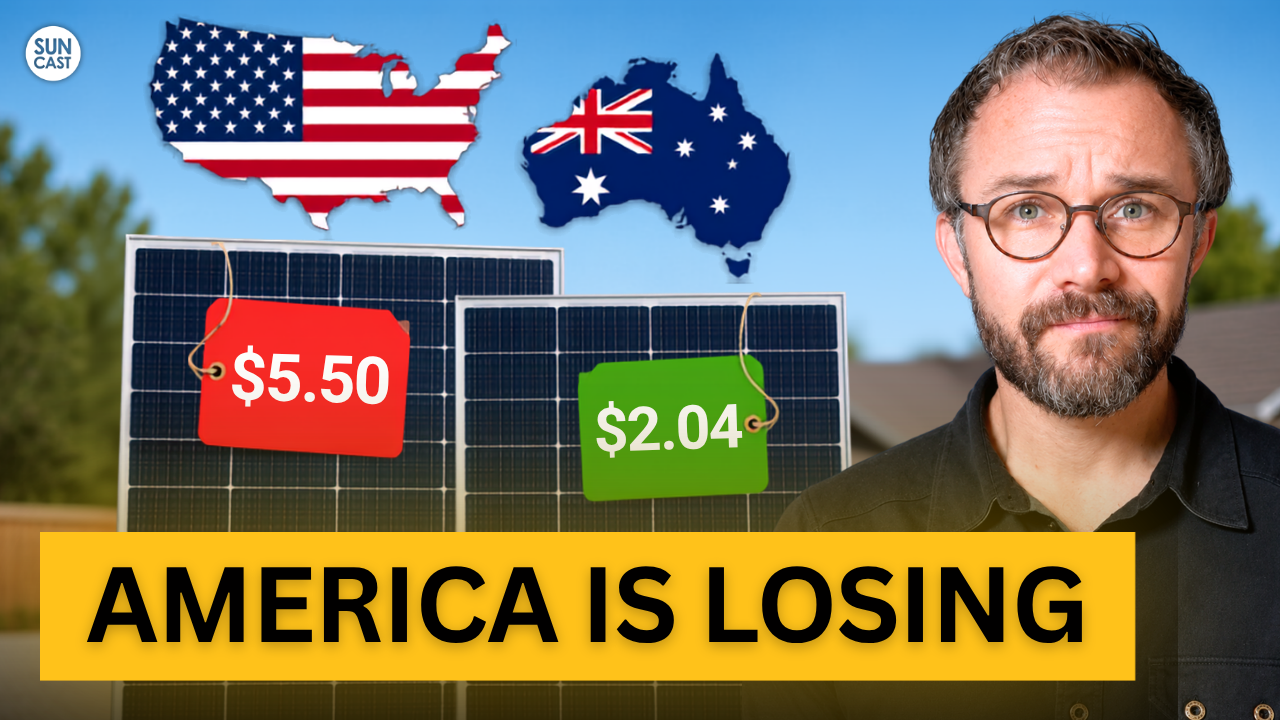
Hey, welcome back, Solar Warriors! If you were with us on our previous journey with Barry Cinnamon, you heard part one, where Barry, founder and CEO of Cinnamon Energy Systems, laid out why Australia installs solar and storage for only $2 a watt, and we in the United States pay closer to 550 a watt, and if you missed it, make sure to queue it up. It's linked in the show notes. It's definitely one worth visiting today. Barry stops diagnosing and starts prescribing, and his prescription is this: What if we make data centers pay for rooftop solar? How? What would that look like? Stay with me on this. Data centers want enormous amounts of power, and they want it fast. They're also willing to pay gobsmack amounts of money per megawatt for the privilege. Utilities will build it for them slowly and expensively, and ratepayers absorb the difference, which is exactly why data centers are picking up a whole lot of nimbyism in every state they walk into, not in my backyard, you say. Meanwhile, there's a way to add capacity that we already know works, that we've already done at scale, and that can be built with less than two years time ramp. It's sitting on our rooftops. Barry's concept is a behind-the-meter feed-in tariff where the data centers write the checks and homes and businesses get paid to host it. He explains it with a mason jar, some walnuts, and a bag of peanuts, which is either the best or worst possible demonstration for a podcast. So bear with us, and you can always go watch the whole interview on our YouTube channel if you haven't subscribed there. Toward the end, we get into plug-and-play solar as well, which we've covered a lot more recently here on the podcast, and that's actually a faster route to the same outcome. All right, let's get into it with Barry Cinnamon on how data centers can help pay for your home solar system.
Barry Cinnamon 01:57
This is the other thing I want to talk about, and it's this is more of a concept. It's not a real product. It's just something that that is really going to solve some of the big problems we have. But it's the concept is basically finding ways to make data centers pay for rooftop solar and storage, so they can actually get the power they need. And it's a zero sum game. Electricity costs are a zero sum game. Yeah. If if the the rates are high, the utilities win. The utilities don't want low rates. They want to make the profits. They want to build as much infrastructure as possible. And there's a tug of war. And now we've got a third party, which is pretty brutal, which is the data centers, and they're saying we want a lot of power. Utilities say we'll give it to you, and the the ratepayers are like we're just going to get screwed. So I had a way of getting around this. But just this slide shows basically how power goes from long distance transmission to to homes, businesses, and data centers. Very rough. We all know about this.
Nico Johnson 02:48
Yes,
Barry Cinnamon 02:48
but the utilities do this very slowly. It's very expensive, and now the data centers are saying, "Shit, you know, hell, we just don't want to pay for all this. We're not going to be able to get our data centers in. So the nice thing about our industry, the rooftop solar industry, is they've done a good job of providing that power. This is a graph that shows what what the trend line was for demand of of you know on the grid in
Nico Johnson 03:11
California
Barry Cinnamon 03:12
in California, and then what actually happened yeah, and what actually happened fascinating.
Barry Cinnamon 03:15
15 gigawatts. We we we somehow found 15 gigawatts of extra solar, and that came from rooftop solar, so it shows that
Nico Johnson 03:23
entirely rooftop solar.
Barry Cinnamon 03:24
Well, that's that's my understanding. So entirely rooftop solar, where and you know the demand kind of spiked coming down. So basically, what happened is that extra capacity was filled in. Yeah, not big power plants, but just came filled in. So let's do through DG. So let's kind of look at an example of this. So let's pretend this this jar over here is the the capacity of the grid, and you know hold that for me because I'm going to hold it. I'm going to fill this up with. I'm
Nico Johnson 03:47
going to hold the jar. I'm not going to hold these.
Barry Cinnamon 03:49
And these walnuts are power plants. And now the grid is full. This is all we can fit. No more power.
Nico Johnson 03:56
Yep. Now we can't generate any more electricity.
Barry Cinnamon 03:58
Yeah. And and what are you going to do? Can't cram more in. Well, there is a way. The way is if you have lots of little power plants that that literally cause peanuts. Here, shake that up. Shake that up a little little bit for me.
Nico Johnson 04:11
There we go. Get it in there. Get it in there. Glad I had lunch. You'd be making me hungry.
Barry Cinnamon 04:15
All right.
Nico Johnson 04:16
Oh,
Barry Cinnamon 04:16
we lost. Just like
Nico Johnson 04:18
just like real life, a few power plants didn't make it.
Barry Cinnamon 04:20
All right, we've doubled the capacity of the grid.
Nico Johnson 04:24
That's magical.
Barry Cinnamon 04:25
Just with peanuts with small power plants. So now let's take that same concept with real power plants, nuts, and rooftop solar and storage. Right. And let's use that. And so the concept here is to have the data centers pay for the peanuts. Yes. The peanuts payments go directly to the homes and businesses that want solar, and that's going to provide all that extra extra power they want. You got to remember, data centers are just like, who do I write a check to to get this to happen? Yeah,
Barry Cinnamon 04:52
and if they're able to write checks through the the utility billing system, probably with CCAs, this thing can happen. So that's the concept. I'm not going to go through all the other details. It's set up so that the residential customers get a fast payback, less than five years. Right. Commercial customers even faster.
Nico Johnson 05:09
3.8
Barry Cinnamon 05:10
positive cash flow because they're getting money from the data centers and plus they save.
Nico Johnson 05:15
Explain to me. Explain to me how the money transaction works, though.
Barry Cinnamon 05:18
That's the tricky thing. That's why this. That's that's why this hasn't happened. So the way this transaction is going to work is the data centers will pay behind the meter feeder behind the meter feed and tariff
Nico Johnson 05:28
tariff. Okay,
Barry Cinnamon 05:29
and they're going to pay that to the owners of businesses.
Nico Johnson 05:33
Okay, and what is the incentive to the data center to pay the behind the meter feed and tariff?
Barry Cinnamon 05:38
The incentive is there's two, there's three. There's actually three incentives. First, they're able to get that power and capacity for $1. Oh, because they're
Nico Johnson 05:46
buying it.
Barry Cinnamon 05:47
Yeah, they get they get it for $1 a watt instead of if they were to go through its standard power plant process, it's $5 a watt. They get it in two years, two years because these things these these nuts go in fast. Yeah,
Nico Johnson 05:59
but it this has it's it has to be controllable load.
Barry Cinnamon 06:02
Yes.
Nico Johnson 06:03
Okay. So VPP.
Barry Cinnamon 06:04
Yep. Right. It would be dispatchable power from the battery.
Nico Johnson 06:08
This will work in Texas. Yep.
Barry Cinnamon 06:10
And then the third thing is they solve the affordability crisis. So there's there's pushback, NIMBY issues with power with data centers all over the country, right? Because they just don't want the power to go up, and then you know the costs to go up. This reduces customer costs.
Nico Johnson 06:24
I like this idea. Have you socialized it in any in any of the circles and powers to be? Yeah. Ah.
Barry Cinnamon 06:31
And we're looking at doing this with the CCA initially. They're interested. We're starting. We're we're next step is to talk to the data centers.
Nico Johnson 06:39
Fascinating. Probably
Barry Cinnamon 06:40
do this in Silicon Valley because there's a few companies there. Like, why do they call
Nico Johnson 06:43
Nick Chazzett up and see what he would think of this? Call Nick. Call Nick. Yeah, yeah.
Barry Cinnamon 06:46
This this is an octopus opportunity.
Nico Johnson 06:49
Oh yeah, it would be absolutely. This is something that I mean, it's a lot of companies' opportunity. But yeah, octopus. Not only that, but obviously he understands the business model of the CCA.
Barry Cinnamon 06:57
Yeah.
Nico Johnson 07:00
Fascinating. Okay, I'm so glad that you explained this because when you sent me this deck, I was clueless. I was trying to figure, wrap my head around what does this mean. Let's
Barry Cinnamon 07:06
just go to the last slide just to kind of cap it off. The data centers will like this because it gets them fast power, cheap power, and they don't have the pushback because of affordability. Yeah, it's kind of a it's a win for the data centers. It's a win for ratepayers, and we're going to get some pushback from that other party at the table, the utilities. But we'll have to deal with that. Inevitable.
Nico Johnson 07:25
Yep. Yeah, we have to win the PUC though.
Barry Cinnamon 07:27
We're both PUC. We might need legislation. You know, we're working with Calsa on this, so we'll see who it goes.
Nico Johnson 07:32
Well, the good news is there's some examples across the nation of technology modifications that have worked in other countries and that are working now here. I think Vermont, Utah. I think Virginia has it on the docket. Hopefully, my state of North Carolina will have it on the docket. This whole concept of balcony or plug-and-play solar. Why don't you talk a bit about your exploration into plug-and-play and how that technology might serve? Might might have a faster path to market than behind the meter feed-in tariff.
Barry Cinnamon 08:06
So it's it's a fascinating concept. Anybody with a micro inverter and plug it in, yeah, you can plug up plug the panel and it's great. It's taken off in Germany.
Nico Johnson 08:14
Yeah,
Barry Cinnamon 08:14
there's a they basically have
Nico Johnson 08:16
gigawatts, right? It's a huge absurd. Yeah,
Barry Cinnamon 08:18
and and they they've made it legal in Germany, and they also have a electrical system that's based on 240 volts instead of 120. Yeah, so it works out. So I've been talking to all the early companies working with Kalsa, working with Bernadette on this, and there's legislation that's that's proposed in California, in addition to Utah, and I think there's like a dozen other countries that cities a dozen other cities are doing it. I
Nico Johnson 08:42
mean, Vermont just voted unanimously. Right.
Barry Cinnamon 08:45
So, so it makes total sense from in theory.
Nico Johnson 08:48
Yeah.
Barry Cinnamon 08:49
There will be pushback from the utilities because basically the utilities in California and elsewhere are basically saying you can't send back one single watt hour apart, or you
Nico Johnson 08:58
become a utility,
Barry Cinnamon 08:59
or you and and but we'll let you do that if you go through the interconnection process, and that's turning out to be really really difficult, right? And and you know for for somebody just plugging something in and then spending $2,000 to get a building permit, no, it's just not going to
Nico Johnson 09:11
work. And so are you saying that's still a hurdle in places like Utah?
Barry Cinnamon 09:14
Yes, no, Utah solved it. Okay, how did they solve it? They just plugged it in with a they they solved it with a very similar law to to what we're proposing in California, there's another. But the real issue that we have to overcome is that there's some national electric code safety issues, UL issues. That
Nico Johnson 09:30
makes sense.
Barry Cinnamon 09:30
So Utah. Well, hang
Nico Johnson 09:32
on. Why would there be issues with UL here? And Germany has figured it out. I mean, Germany is famously very high on safety and engineering. What are
Barry Cinnamon 09:42
that's that's a good question, but they're they're allowing it.
Nico Johnson 09:45
Okay, they're they're. I see.
Barry Cinnamon 09:46
They have one reason is that they have 240 volts on their circuits. Okay, so if you plug in one panel, you're not going to create an overload as easily. That makes sense. But there there there's apparently not as much pushback from utilities. But here in the U.S. you're not. Allowed to do that unless once we solve the UL listing issues, which we're working on, then this thing's going to fly. So the expectation is we'll get this passed. What's
Nico Johnson 10:10
your prognosis then on timeline of like major states like California?
Barry Cinnamon 10:15
There's no reason why I can't get done this year. Wow, this
Nico Johnson 10:18
this legislative session. This
Barry Cinnamon 10:19
legislative session is being pushed very hard. Affordability is huge. So it used to be that the legislators in California would push back and say, "Oh, you know, it's not that big a deal. Now it's it's the top of everybody's list. Affordability. This is the
Nico Johnson 10:30
answer. And people say, "What business would you build if you weren't doing SunCast? It would be a balcony solar company here in the United States. I just think it's so fascinating.
Barry Cinnamon 10:40
It's. I look at it. I'm in the rooftop solar business. I install 20 solar panels in and 20 kilowatt bags. It just feels too small. It it's great for apartments. It's great for little you know tiny little houses. It's great for running an extension cord out. Think about the
Nico Johnson 10:52
aggregation possibility.
Barry Cinnamon 10:53
It it it's it's it's there. Yeah. I I consider it a gateway drug to rooftop solar. Sure. And and and it would be terrific once we're able to overcome the utility objection to backfeeding 1,200 watts. Yeah, maybe because of the affordability of sugar, we can get 10,000. But it's not a
Nico Johnson 11:09
gateway drug to the kinds of clients that are buying balcony solar and mass in in in the Philippines in in Germany. Where's the other? There's a country. Pakistan. In Pakistan, where it's literally like they're hanging it out on balconies of apartment buildings, Barry. When
Barry Cinnamon 11:25
this is in Costco for you know 500 bucks, then so your point is everywhere.
Nico Johnson 11:30
So your point is how how are you going to start a business that where Costco is your competitor?
Barry Cinnamon 11:34
Where Costco is going to be your retailer?
Nico Johnson 11:36
Yeah, of course.
Barry Cinnamon 11:37
So it's got to be a manufacturer and Amazon. Yeah, yeah. I don't know if it's going to be Amazon because you got to move the solar panel, but once the solar panel's in a box, Amazon could do it. They could. You
Nico Johnson 11:46
got to move the solar panel. They're shipping kettlebells. What are you talking about? They're shipping. They're shipping. They're shipping jacuzzis.
Barry Cinnamon 11:51
All right, all right. They can do it. They can do it. It used to be really hard when you have a broken solar panel. Like, how do you fix it for a customer? Cost 500 bucks. Fair. They. That's a tremendous amount of potential, and it and it's going to. It's kind of like letting the camel's nose under the tent.
Nico Johnson 12:05
I think I love it. I think the better question that folks are asking, and to your point, you're doing you know 2050, 100 panel systems. Is how does this? How does it scale? How does it matter? There's such there's such small systems. It's two panels, three panels. May as well be selling. It's it's similar to selling, you know, systems in the Caribbean, right?
Barry Cinnamon 12:25
For for apart for a one or two bedroom apartment that can put you know 800 watts of solar panels out there. What does it offset? It could offset 20%
Nico Johnson 12:33
20% Yeah, interesting. So we did an analysis about a year ago on the podcast with Karen Baran, and he it was it was fascinating. If the state of California would invest into this, and you might you might want to talk about to care about this, it would be the equivalent of $1,000 stimulus check to the family that receives the product every year for the lifetime of the product. Isn't that fascinating?
Barry Cinnamon 12:55
It's it's a good deal. Yeah,
Nico Johnson 12:56
it's an it's a fantastic deal. All right, that's a wrap on this episode with Barry Cinnamon, I hope you caught the first one where we talked about why Australia is winning the dollar per watt race, well under $2 a watt. If you didn't, we'll link to it again in the episode notes. You should go check that out. Make sure you subscribe to the podcast because that's how you'll know every time we drop episodes just like this. Hit the bell so you'll be notified as well. Of course, this conversation we just had with Barry is a serious conversation. The walnuts are a gimmick. The point underneath it is not. Our grid has a fixed amount of room in it, and we have spent decades assuming that the only way to add capacity is to add more big things: central electrical generation. Barry's argument is that the space between the big things is enormous, and distributed generation, namely solar and storage, is the only asset class that can get in there and fill it in in under two years. California proved that, sort of by accident, 15 gigawatts that nobody really even planned for. Whether the money can actually move the way he describes is an open question. Through a CCA, through the utility billing system, past a public utility commission that has every reason to say no. Barry knows that. It's why he's starting with the CCAs in Kalsa rather than picking a fight that we can't win yet. But I'd point out that the affordability argument is doing a lot of the work here, and affordability is the one thing that every legislator in this country is nervous about right now. That's leverage we haven't had before. I don't think our industry has fully worked out how we use it, but I do have some conversations in the podcast feed if you haven't seen them yet that attempt to get at it and answer it. If you missed part one of Barry's conversation, please go tune into it. If you missed the conversation I had with Molly and Jamie Nolan at the Chesa Energize Summit, where we do touch on how solar and storage can help in the affordability conversation, and hope go listen to that as well. As I mentioned, Barry is the founder of Cinnamon Energy Systems, and we'll link to Barry and how you can listen to his podcast or connect with him and his company in the show notes as well. Remember, you are what you listen to. Thanks again for showing up, Solar Warrior. It's half the battle.

Nico Johnson
Entrepreneur & Podcaster
In my 20 year career, I've worked with dozens of entrepreneurs, intrapreneurs and professionals in transition to clarify their mission, set or stretch their goals, and work through the barriers to their growth.

Latest episodes
We’re Excited to Hear from You!
Don’t hesitate to reach out—whether you’re here to learn, share ideas, or work with us, we’re ready to connect.